The WAHVA Surcharge: Transport Canada's Crackdown on Abandoned Boats
Honestly, when was the last time you thought about your Pleasure Craft Licence? For most of us, it’s a piece of paper (or plastic) we got years ago, tucked away in a folder somewhere. But a small change is coming that you’ll definitely notice on your next

Dwayne Rodrigues
Boat Owner & Enthusiast
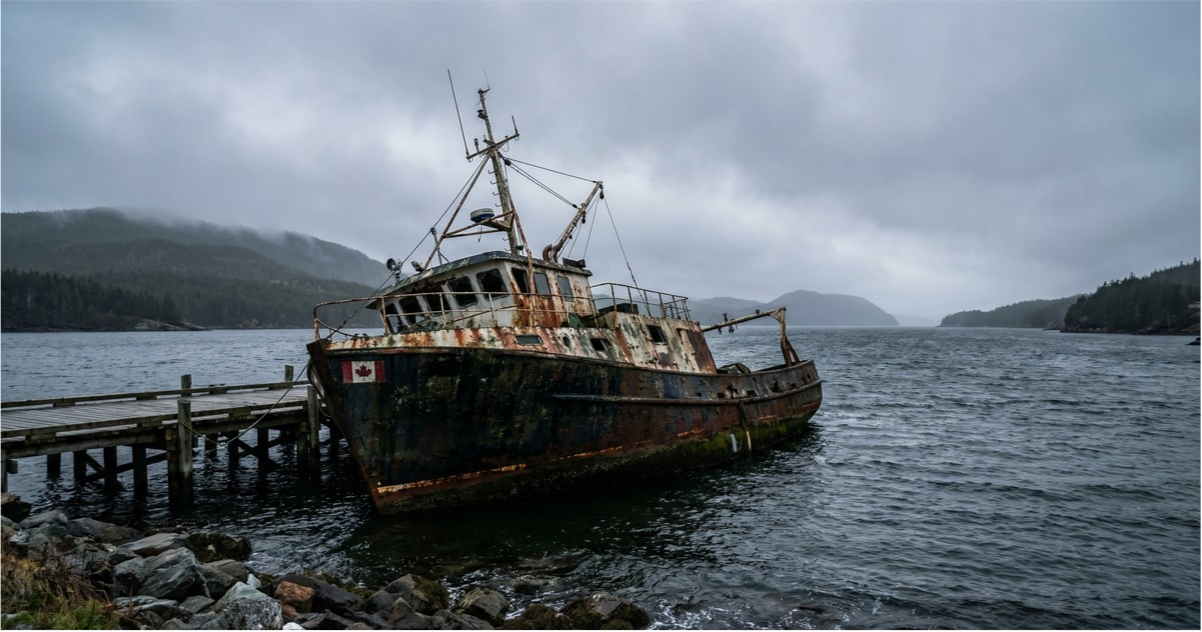
Honestly, when was the last time you thought about your Pleasure Craft Licence? For most of us, it’s a piece of paper (or plastic) we got years ago, tucked away in a folder somewhere. But a small change is coming that you’ll definitely notice on your next renewal, and it has everything to do with a growing problem on our shorelines: abandoned boats.
Transport Canada is rolling out a new mandatory surcharge tied to the Wrecked, Abandoned or Hazardous Vessels Act, or WAHVA. It’s a bit of an alphabet soup, I know, but stick with me. This is important.
This isn't just another government cash grab. It’s a direct response to the dozens of rusting, leaking, and half-sunken boats littering our beautiful Great Lakes, from the Toronto Islands to the shores of Lake Erie. We’ve all seen them—the sad, forgotten vessels slowly giving up the ghost, becoming both an eyesore and an environmental hazard. Now, we’re all going to chip in a little to help fix the problem.
Quick Takeaways
What is it? A new mandatory $10 federal surcharge for all pleasure craft, collected every five years when you get or renew your Pleasure Craft Licence (PCL).
Why? To fund the Vessel Remediation Fund (VRF), which pays for the removal of wrecked, abandoned, or hazardous vessels (WAHVA) from Canadian waters.
The Law: The Wrecked, Abandoned or Hazardous Vessels Act (WAHVA) makes it illegal to abandon your boat, with fines up to $50,000 for individuals.
The Problem: Over 2,000 problem vessels are being tracked across Canada, with 41 identified in the western Lake Ontario area alone, posing environmental and safety risks.
The Bottom Line: This small fee is a proactive step to ensure taxpayers aren't left with the multi-million-dollar cleanup bill for irresponsible boat owners.
So, What Exactly is This WAHVA Surcharge?
Let me break it down. The next time you go to renew or get a new Pleasure Craft Licence (PCL), you’ll see an extra $10 fee tacked on. This isn’t part of the PCL fee itself; it’s a separate regulatory charge that goes into a national pot called the Vessel Remediation Fund (VRF).
Think of it like a mandatory insurance policy for our waterways. This fund gives Transport Canada and the Canadian Coast Guard the money they need to step in and deal with problem vessels when the owner can't be found or simply refuses to take responsibility. [1]
And it’s not just us pleasure craft folks paying up. The fee structure is tiered, so commercial operators are paying a much larger share:
Vessel Type | Surcharge (Every 5 Years) |
|---|---|
Pleasure Craft | $10 |
Commercial (under 15 gross tons) | $250 |
Commercial (15-150 gross tons) | $500 |
Commercial (over 150 gross tons) | $1,000 |
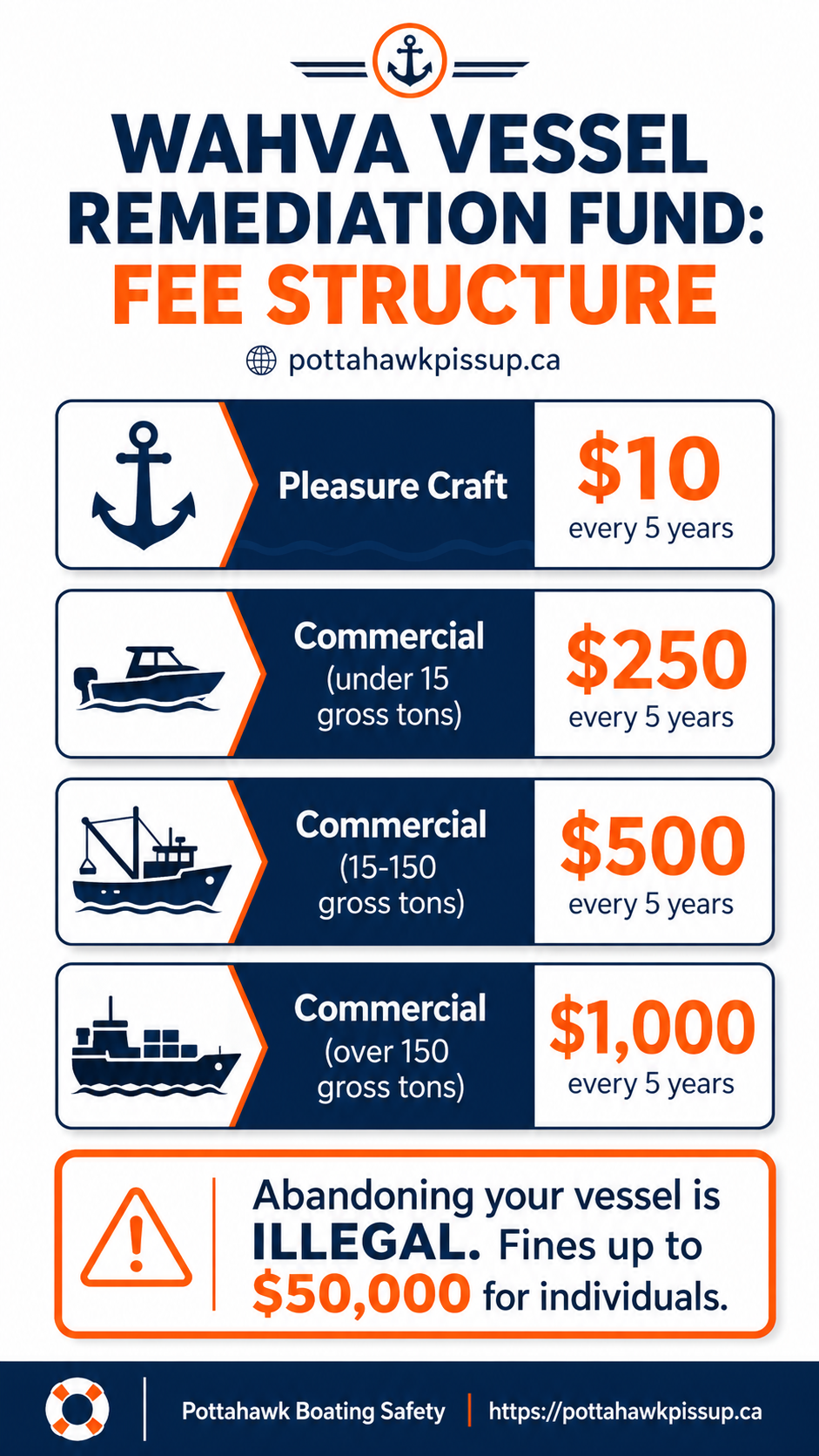
This tiered system makes sense. While there are a lot more of us recreational boaters, the cost and complexity of removing a large commercial vessel are exponentially higher. This way, everyone contributes, but the burden is proportional.
The Environmental Cost: More Than Just an Eyesore
It’s easy to dismiss an abandoned boat as just ugly, but the real damage is often invisible. As a vessel deteriorates, it becomes a ticking environmental time bomb. The fiberglass hull, saturated with decades of marine growth and chemicals, starts to break down, releasing microplastics into the water. These tiny particles are ingested by fish and other wildlife, working their way up the food chain.
But that’s just the start. Inside the boat, a toxic cocktail is waiting to escape. Engine oil, diesel fuel, hydraulic fluid, and coolant can leak from corroded lines and tanks. A single litre of oil can contaminate up to one million litres of water. Then there are the heavy metals from batteries leaching lead and acid, and the anti-fouling paint on the hull slowly releasing copper and other biocides into the ecosystem. Our Lake Erie Boating Safety Guide highlights the importance of a clean lake, and these wrecks are a direct threat to it.
The Anatomy of a Removal: Why This Fund is Necessary
Ever wonder what it actually takes to get rid of an abandoned boat? It’s not as simple as just towing it away. It’s a costly and complex process, which is precisely why this fund is so critical.
First, there's the assessment. A team has to go out and determine the risks. Is it actively leaking fuel? Is the hull about to break apart? Is it a navigational hazard? This alone takes time and resources.
Then comes the environmental containment. If there's any risk of pollution, crews have to deploy booms to contain oil, diesel, and other chemicals. The boat's fluids, fuel, oil, coolant, hydraulic fluid all have to be carefully pumped out and disposed of according to strict environmental protocols. This isn't just a suggestion; it's the law, and it's expensive.
Finally, there's the removal itself. Depending on the boat's condition and location, this can involve cranes, barges, and specialized cutting equipment. If the boat has sunk, the operation becomes a salvage dive, which is even more complex. Once on shore, the vessel has to be dismantled and its materials fiberglass, treated wood, metals—have to be disposed of in a licensed facility. You can’t just take it to the local dump.
The total bill for a single small cruiser can easily run into the tens of thousands of dollars. For larger vessels, it can be hundreds of thousands. Without the Vessel Remediation Fund, that cost would fall directly on taxpayers.
Why Now? The Growing Problem of Ghost Ships
You might be wondering if this is really necessary. Is the problem that bad? In a word: yes.
According to a CBC News report, there were 41 identified hazardous or abandoned vessels just in the western part of Lake Ontario, stretching from Pickering to St. Catharines. Nationwide, the Canadian Coast Guard is tracking over 2,000 of these problem boats. These aren't just old fishing skiffs; they include everything from neglected sailboats to large, steel-hulled cruisers slowly rusting away.
"The financial crisis that we find ourselves in can make vessel ownership challenging," Robert Brooks of the Canadian Coast Guard told CBC News. "It can be an expensive business to be in, or hobby to have."
He’s right. When faced with thousands of dollars in disposal fees for an end-of-life boat, some owners make the irresponsible choice to just walk away. They tie it to a public dock under the cover of darkness or let it drift from its mooring, hoping it becomes someone else’s problem. But under WAHVA, it’s now a criminal act.
The Teeth of WAHVA: This Law Isn’t Messing Around
Before WAHVA came into force in 2019, dealing with abandoned boats was a legal nightmare of jurisdictional squabbles. Now, the rules are crystal clear.
It is illegal to abandon your boat. Period.
And the penalties are severe. We’re not talking about a slap on the wrist. In December 2025, the owner of a derelict boat off Saanich, B.C. was handed a $15,000 fine. Another owner was hit with a $13,500 penalty just a few months earlier. These aren't just warnings; they are real, substantial fines being levied right now.
Under the Act, individuals can face fines up to $50,000 and even six months in jail. For corporations, that number jumps to a staggering $250,000. The message from the federal government is unmistakable: your boat is your responsibility, from launch day to its final, proper disposal.
The Owner's Dilemma: A Tale of Two Choices
Let's get practical. Imagine you have a 28-foot cruiser from the 1990s. It’s been a great boat, but the engine needs a complete rebuild, the hull has some soft spots, and you just don’t have the time or money to fix it anymore. You’re facing a tough choice.
Choice A: The Responsible Path. You call a marine salvage yard or a boat disposal service. They quote you $3,000 to $5,000 to safely dismantle and dispose of the vessel. It’s a painful cheque to write, but it’s the end of your responsibility.
Choice B: The Reckless Gamble. You decide to save the money. You tow the boat to a quiet, unused public dock late one night, scrape off the registration numbers, and walk away. For a few months, you think you’ve gotten away with it. Then, a letter arrives from Transport Canada. Your boat was identified, and you’re being fined $20,000 under WAHVA. On top of that, you’re being billed another $15,000 for the removal and environmental cleanup costs. Your attempt to save $5,000 has just cost you $35,000 and a potential criminal record.
This isn't a scare tactic; it's the new reality of boat ownership in Canada.
Proactive Ownership: Planning for Your Boat's Final Voyage
Responsible boating isn't just about what you do on the water; it's about having a plan for the entire life of your vessel. Just like you'd save for retirement, you should have a plan for your boat's eventual decommissioning.
Start a Sinking Fund (Pun Intended): Set aside a small amount of money each year in a dedicated savings account for your boat's end-of-life costs. Even $100 a year for 20 years gives you a $2,000 cushion.
Know Your Local Options: Research boat disposal and salvage yards in your area before you need them. Get a sense of their services and costs.
Maintain, Maintain, Maintain: The better you maintain your boat, the longer its life and the higher its resale value, pushing its disposal date further into the future. A good pre-trip inspection checklist is your best friend here.
Consider Donating: Some charities accept boat donations, but be aware they usually want vessels in good working order. This is an option for a boat you've outgrown, not one that's falling apart.
How This Connects to Your PCL and Pottahawk
This new surcharge directly ties into the changes we’re already seeing with our Pleasure Craft Licences. As we’ve discussed in our guide to the 2026 boat licence changes, Transport Canada is getting serious about vessel identification. This is all part of the same ecosystem. By ensuring every boat is properly licensed and accounted for, it becomes much harder for owners to disappear when their vessel becomes a problem.
For the Pottahawk community, this is fantastic news. It means cleaner, safer waterways for all of us. The last thing anyone wants is to navigate a minefield of semi-submerged hazards on their way to the event. The fund is a direct investment in the long-term health of Turkey Point and Long Point Bay. It ensures that the beautiful anchorages we all enjoy don't become dumping grounds.
The Bottom Line: A Small Price for a Big Solution
Nobody loves a new fee. But honestly, a $10 charge every five years, the cost of a couple of fancy coffees, is a tiny price to pay to ensure our lakes don't turn into marine graveyards. It protects our environment, enhances our safety, and holds irresponsible owners accountable.
So, when you see that extra $10 on your next PCL renewal, don’t get annoyed. See it for what it is, your contribution to a cleaner, safer Lake Erie for everyone.
Sources & Further Reading
Tags
Share
Read Next
 News
NewsBoating Accident Reports and Lessons: What Recent Years Have Taught Us
Every time you turn the key and hear that outboard rumble to life, you are taking on a massive responsibility. Most days on the water end with sunburns, empty coolers, and great memories. But when things go wrong out there, they go wrong fast.

Dwayne Rodrigues
Boat Owner & Enthusiast
 News
NewsThe New 2025/2026 Lifejacket Standards: What "Level 70" Means for Your Next PFD
It’s that time of year again. You’re pulling the boat out of storage, dusting off the coolers, and dreaming of those long summer days on Lake Erie. But before you even think about launching, you head to the store for the annual pre-season stock-up.
Dwayne Rodrigues
Boat Owner & Enthusiast
 News
NewsIs Your Boat Licence Expiring? The New 2026 Rules That Could Cost You a Fine
Remember when your Pleasure Craft Licence (PCL) was free and lasted pretty much forever? Well, those days are officially over. As of December 31, 2025, Transport Canada rolled out a whole new set of rules, and if you haven’t heard about them, you’re not
Dwayne Rodrigues
Boat Owner & Enthusiast