The Ultimate Boat Packing Checklist: Beyond the Basics
There’s a certain magic to the moment you decide, “We’re going out on the boat today.” The excitement builds, the plans start coming together, and you can already feel the sun on your face and the gentle rock of the waves.

Dwayne Rodrigues
Boat Owner & Enthusiast
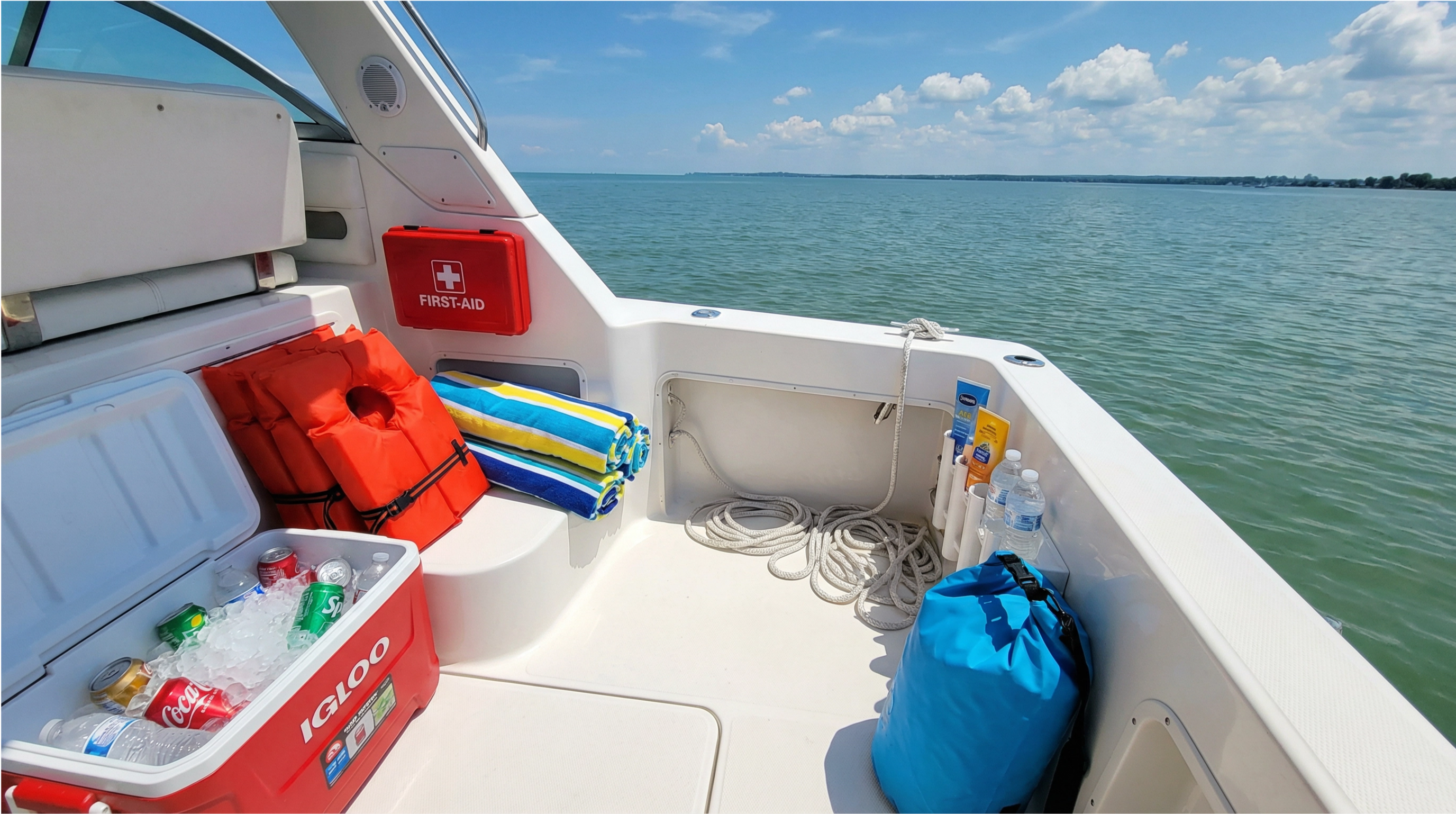
There’s a certain magic to the moment you decide, “We’re going out on the boat today.” The excitement builds, the plans start coming together, and you can already feel the sun on your face and the gentle rock of the waves. But in that rush to get to the water, it’s so easy to forget something. And on a boat, a forgotten item isn’t just an inconvenience; it can be the difference between a great day and a genuinely bad one. I’ve been there more times than I’d like to admit. The day I forgot the anchor (yes, really). The time we ran out of water on a scorching hot afternoon. The trip where a simple headache became a major issue because no one had any pain reliever.
That’s why a good packing list is a captain’s best friend. But I’m not just talking about a list of the legally required safety gear. Any boater can look that up. A truly great packing list goes beyond the basics. It anticipates the needs of your crew, prepares you for the unexpected, and transforms your boat into a self-sufficient island of comfort and safety. It’s about thinking less like a minimalist and more like a seasoned host who has seen it all. This isn’t just a checklist; it’s a philosophy. It’s about taking care of your people, which is the most important job any captain has.
This guide is designed to be your ultimate resource, a comprehensive brain-dump of everything you could possibly need for a day on the water. We’ll cover the non-negotiable safety items, the creature comforts that make a good day great, and the little things you’ve probably never thought of. And yes, there’s a downloadable checklist at the end to make your life easier.
Quick Takeaways
Think in Layers: Safety, Comfort, and Convenience. Your packing should be organized into three categories: the must-have safety gear, the items that keep your crew comfortable, and the little extras that make the day special.
The “Just in Case” Bag is Your Best Friend. A dedicated bag for first aid, medications, and other emergency items is non-negotiable. It’s the one bag you hope you never have to open, but you’ll be a hero when you do.
Hydration and Sun Protection are Non-Negotiable. You can never have too much water or too much sunscreen. Dehydration and sunburn are the two fastest ways to ruin a day on the water.
A Downloadable Checklist is Your Pre-Launch Ritual. Don’t rely on your memory. Use our downloadable checklist every single time you head out. It’s the secret to never having that “Oh no, I forgot the…” moment again.
The Three Layers of a Perfectly Packed Boat
A well-packed boat is like a well-made cake. It has layers. Each one builds on the last to create something amazing. I like to think of it in three distinct categories: The Foundation (Safety), The Framework (Comfort), and The Finish (Convenience).
Layer 1: The Foundation (Safety First, Always)
This is the stuff you absolutely, positively cannot leave the dock without. This isn’t just my opinion; much of it is legally required. As our Lake Erie Boating Safety Guide makes clear, having the right safety gear is the bedrock of responsible boating. According to Transport Canada’s official Safe Boating Guide, the minimum requirements are just that: a minimum. A smart captain always has more.
Your Paperwork: Your Pleasure Craft Operator Card (PCOC), the vessel’s license, and proof of insurance. Keep them in a waterproof bag. Trust me.
Life Jackets & PFDs: One for every single person on board, of the correct size. And don’t just have them; know where they are and make sure everyone else does too.
Throwable Device: A life ring or buoyant heaving line. It’s much easier to throw a ring than it is to turn a boat around in a panic.
Signaling Devices: A waterproof flashlight, flares (check those expiry dates!), and a sound-signaling device (a horn or a whistle).
Fire Extinguisher: Make sure it’s the correct class for your boat and that it’s easily accessible.
First-Aid Kit: A well-stocked kit is a must. We’ll dive deeper into what should be in it in the next section.
Anchor & Rode: An anchor with a sufficient amount of line is your emergency brake. Don’t leave the dock without it.
Manual Bilge Pump or Bailer: Because you never know.
VHF Radio: Your cell phone is not a reliable communication device on the water. A VHF radio is essential for communicating with other boats and with emergency services.
Layer 2: The Framework (Creature Comforts)
This is the layer that separates a survival exercise from a genuinely fun day on the water. This is about keeping your crew happy, comfortable, and cared for. As we discuss in our guide on Why Group Behavior Changes Boating Decisions, a comfortable crew is a safe crew. When people are hot, hungry, or uncomfortable, they get distracted and make poor decisions.
The “Just in Case” Bag: This is my personal secret weapon. It’s a dedicated dry bag that contains:
A comprehensive first-aid kit: Beyond the basics, include things like pain relievers (ibuprofen, acetaminophen), allergy medication (antihistamines), motion sickness remedies, insect repellent, and after-sun lotion.
Extra Sunscreen: The spray-on kind and the lotion kind. Someone will always forget theirs.
A Change of Clothes: A warm sweatshirt and a pair of pants for everyone on board. The temperature can drop surprisingly fast when the sun goes down.
Extra Towels: You can never have too many.
Hydration Station: Bring more water than you think you’ll need. A good rule of thumb is at least two liters per person. And bring it in reusable bottles to minimize waste.
The Snack Stash: Pack snacks that are easy to eat with one hand and won’t make a huge mess. Things like granola bars, trail mix, and fruit are perfect. Avoid anything that can melt into a sticky mess.
The Sun Protection Arsenal: A wide-brimmed hat, polarized sunglasses, and a long-sleeved sun shirt are just as important as sunscreen.
Layer 3: The Finish (The Little Things That Make a Big Difference)
This is the layer that takes your boating game from good to great. These are the little things that show you’re a captain who thinks of everything. They are the details that your guests will remember and appreciate.
The “Oops” Kit: A small tackle box with things like extra dock lines, a multi-tool, zip ties, and a roll of electrical tape. You’ll be amazed at how often this comes in handy.
Portable Power: A fully charged portable power bank for charging phones and other devices.
The Playlist: A good boating playlist is essential. Download it to your phone so you don’t have to rely on a cell signal.
Waterproof Speaker: Because no one wants to listen to music coming from a tinny phone speaker.
Trash Bags: Pack more than you think you’ll need. And make sure you use them. A clean boat is a happy boat.
A Sharp Knife: For cutting lines, opening packages, and a million other things.
Your Pre-Launch Ritual: The Downloadable Checklist
Reading a list is one thing. Actually using it is another. That’s why we’ve created a comprehensive, downloadable PDF checklist that you can print out and use every single time you go out on the boat. Make it a part of your pre-launch ritual. Go through it item by item. It’s the single best way to ensure that you never have that sinking feeling of having forgotten something important.
Download Your Ultimate Boat Packing Checklist Here
Being a great captain isn’t about having the biggest boat or the most powerful engine. It’s about being prepared. It’s about taking care of your crew. It’s about thinking ahead so that when you’re out on the water, all you have to worry about is enjoying the moment. This checklist is your tool to help you do just that. Use it, customize it, and make it your own. Your future self will thank you.
Sources & Further Reading
Tags
Share
Read Next
 Resources
Boat Insurance in Ontario: What It Covers, What It Costs, and What Most Boaters Get Wrong
Let me ask you a question. If you back your boat into a slip at Port Dover and accidentally crunch the fiberglass on the cruiser next to you, who pays for it? What if a sudden summer squall rips through the anchorage at Pottahawk and your anchor drags,

Dwayne Rodrigues
Boat Owner & Enthusiast
 Resources
How to Summerize Your Boat: The Complete Spring Checklist for Canadians
There is a specific feeling that hits every Canadian boater around late April or early May. The ice has finally melted off Lake Erie, the sun is starting to feel genuinely warm, and you catch yourself staring at the boat trailer in the driveway. You know
Dwayne Rodrigues
Boat Owner & Enthusiast
 Resources
Transport Canada Boating Rules: The Complete Guide
Navigating the waters of Canada offers some of the most spectacular recreational boating in the world, from the vast expanses of the Great Lakes to the intricate networks of coastal inlets. However, this privilege comes with a profound responsibility.
Dwayne Rodrigues
Boat Owner & Enthusiast