Toronto to Pottahawk 2026: Surviving the Crossing & Welland Canal
So, you're thinking about making the trek from Toronto to Pottahawk. Good on you! It's a rite of passage for any serious Lake Ontario boater, a proper adventure that separates the weekend warriors from the seasoned captains. But let's be honest, it's not

Dwayne Rodrigues
Boat Owner & Enthusiast
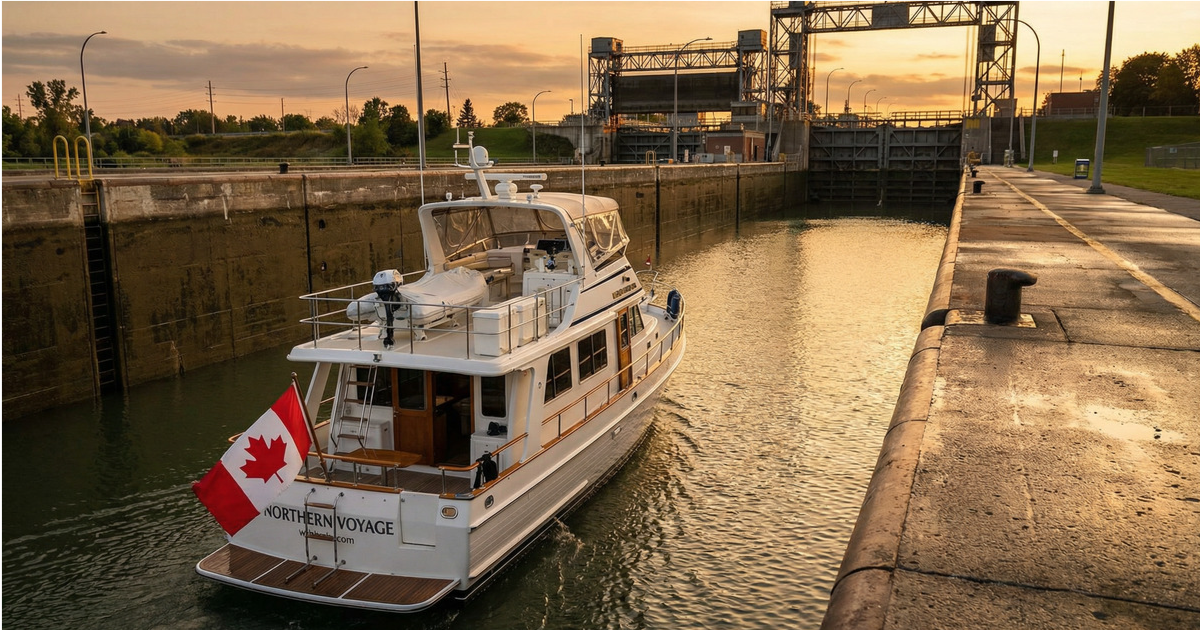
So, you're thinking about making the trek from Toronto to Pottahawk. Good on you! It's a rite of passage for any serious Lake Ontario boater, a proper adventure that separates the weekend warriors from the seasoned captains. But let's be honest, it's not exactly a straight shot across the bay. This is a real journey, a multi-day trip that requires planning, patience, and a healthy respect for the Great Lakes.
This isn't just another blog post telling you to "be safe out there." This is your comprehensive, no-nonsense guide to getting from your slip in Toronto to the legendary Pottahawk Point raft-up. We're going to cover the route, the infamous Welland Canal, where to stop, what you absolutely need to know before you cast off, and all the practical details that make the difference between a smooth cruise and a stressful slog.
Quick Takeaways: The Short Version
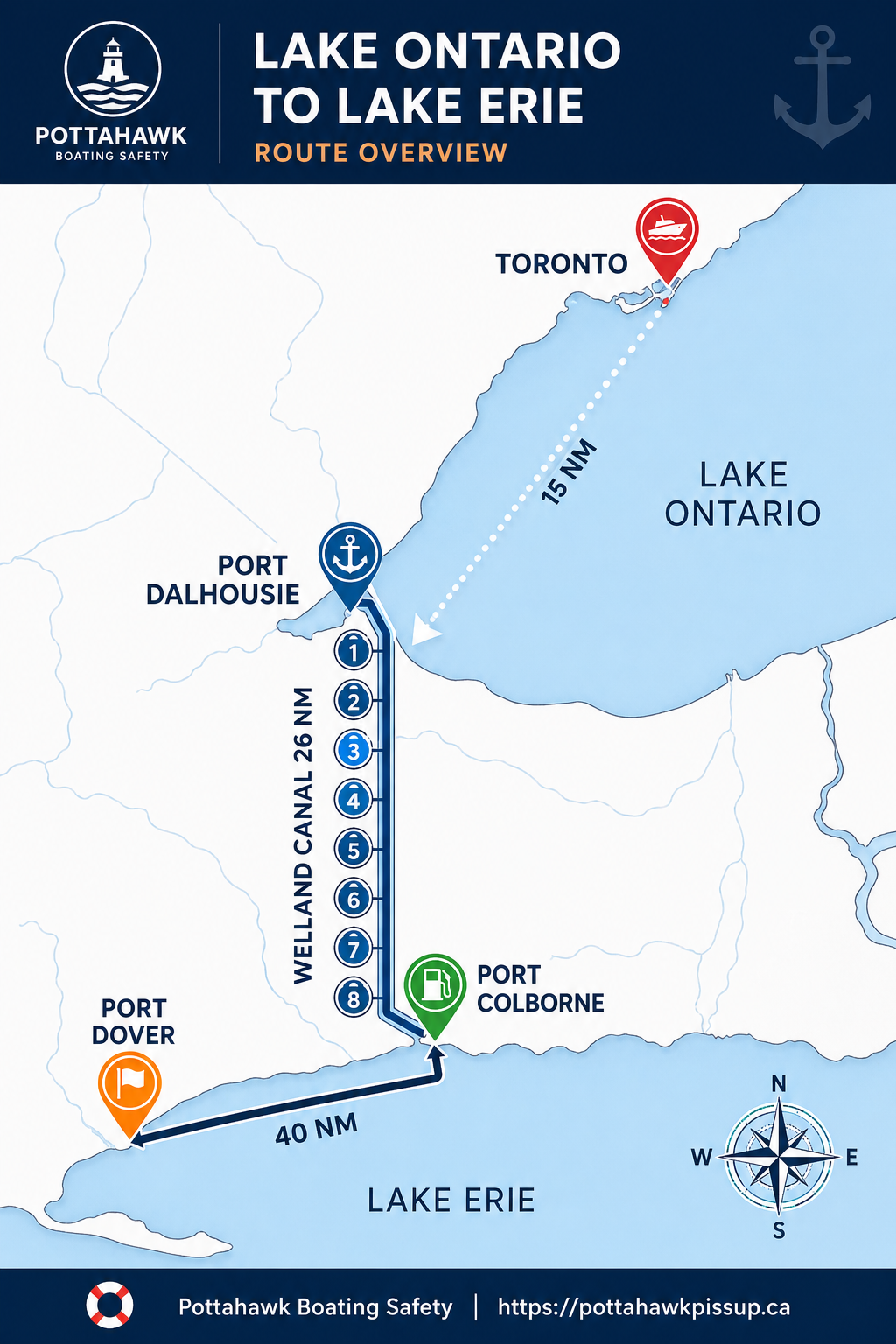
The Route: Toronto → Port Dalhousie → Welland Canal → Port Colborne → Port Dover.
Total Distance: Approximately 80-90 nautical miles.
Total Time: Plan for a 2-day trip, minimum. The Welland Canal alone is a 12+ hour affair.
The Big Hurdle: The Welland Canal and its 8 locks.
Cost: Expect to pay around $200 CAD for the Welland Canal transit, plus marina fees.
Key Stops: Port Dalhousie (pre-canal), Port Colborne (post-canal), Port Dover (destination).
Reservations: You MUST reserve your Welland Canal transit in advance before 7 a.m. on your day of transit.
Crew: Minimum 3 people required for the Welland Canal.
Season: Best attempted May through September when weather is most predictable.
Pre-Departure: What You Need Before You Leave Toronto
Before you even think about untying those dock lines, you need to get your boat and crew ready. This isn't a Sunday afternoon jaunt to the Islands. You're crossing open water, transiting a major commercial waterway, and spending at least one night away from your home marina.
Documentation and Licensing
Make sure your Pleasure Craft Licence Card (PCL) is up to date. With the new Transport Canada regulations rolling out in 2026, you'll want to double-check that your boat licence hasn't expired. The last thing you need is to get turned around at the canal because your paperwork isn't in order.
You'll also need to have your boat registration and proof of insurance readily accessible. If you're crossing the border or stopping at any US ports (which some boaters do via the NY Canal System), you'll need proper documentation for customs clearance.
Safety Equipment Check
The Great Lakes St. Lawrence Seaway System doesn't mess around when it comes to safety requirements. Your boat must be at least 6 meters (20 feet) long and weigh at least 900 kg (1 ton) to transit the Welland Canal. Beyond that, you need:
Life jackets (PFDs) for every person on board. The official guide highly recommends wearing them at all times during transit.
VHF marine radio capable of monitoring Channel 14 (the Welland Canal working frequency) and Channel 16 (emergency).
Proper fenders for lock walls. You'll want at least four good-sized fenders, and more is better.
Strong dock lines (minimum four: two bow, two stern). These need to be long enough to handle the lock lifts, which can be substantial. Think 50-75 feet minimum.
Navigation lights in good working order.
Sound signaling device (horn or whistle).
Fire extinguisher and flares or electronic visual distress signals.
Fuel Planning
This is critical. You're looking at roughly 80-90 nautical miles of travel, and fuel stops are limited. Here's the reality: you can fuel up in Toronto before you leave, at Port Dalhousie before the canal, and at Sugarloaf Marina in Port Colborne after the canal. Port Dover also has fuel available.
Calculate your fuel consumption carefully. Factor in the 12+ hours you'll spend idling and maneuvering through the Welland Canal. A good rule of thumb is to plan for 1.5 times your normal fuel consumption for the total distance. Don't be that guy who runs out of fuel halfway through the canal.
Weather Windows and Timing
Lake Ontario and Lake Erie are not to be trifled with. These are big bodies of water that can generate serious waves in a hurry. You need a solid weather window for both the Lake Ontario crossing and the Lake Erie leg to Port Dover.
Check the marine forecast religiously in the days leading up to your departure. You're looking for winds under 15 knots and wave heights under 1 meter. A westerly or northwesterly wind is ideal for the Lake Ontario crossing, as it will give you a following sea. For the Lake Erie leg, you want calm conditions or a light westerly.
Don't be a hero. If the forecast is marginal, wait. Pottahawk will still be there tomorrow.
The Journey Begins: Toronto to Port Dalhousie
This is your first open-water leg, a roughly 27-kilometer (15 nautical mile) shot across Lake Ontario to Port Dalhousie in St. Catharines. The crossing itself is straightforward from a navigation standpoint, but Lake Ontario demands respect.
Departure from Toronto
Most Toronto boaters will depart from marinas in the Toronto Harbour or along the waterfront. Your heading will be roughly southwest, aiming for the mouth of the Welland Canal at Port Weller. However, most boaters stop first at Port Dalhousie, which is just a couple of miles east of Port Weller, for a more relaxed approach.
File a float plan with a reliable friend or family member before you leave. Let them know your intended route, your vessel details, and your estimated time of arrival. This is non-negotiable. If something goes wrong out there, you want someone on shore who knows where you are.
The Crossing
Depending on your boat's hull speed and the conditions, this crossing can take anywhere from a quick 45-minute blast in a fast cruiser to a more leisurely 3-4 hour cruise in a displacement hull. Keep a sharp lookout for other traffic, especially commercial vessels and ferries. The Toronto waterfront is busy.
Once you're clear of the harbour, settle into your course and monitor your instruments. Keep an eye on the weather. If conditions deteriorate, you can always turn back. There's no shame in that.
Arrival at Port Dalhousie
As you approach the south shore of Lake Ontario, you'll see the distinctive skyline of St. Catharines and the entrance to Port Dalhousie. The Port Dalhousie Pier Marina is a fantastic spot to rest up before your big day in the canal. It's a popular marina, so book your transient slip in advance, especially during peak season (July and August).
Get fueled up here if you need to. Grab a good meal in the charming old town of Port Dalhousie. There are several great restaurants within walking distance of the marina. Get a good night's sleep. Tomorrow, you're tackling the Welland.
Conquering the Canal: A Day in the Welland
Alright, here's the main event: the Welland Canal. This 26-nautical-mile marvel of engineering will lift (or lower) you over the Niagara Escarpment via a series of eight massive locks. It's an incredible experience, a bucket-list item for any Great Lakes boater, but it's also a long, demanding day that requires your full attention and cooperation.
Reservations, Fees, and Scheduling
First things first: you can't just show up. You must book your transit through the Great Lakes St. Lawrence Seaway System's online reservation portal. Reservations must be made before 7 a.m. on your day of transit, and the fee is a cool $200 CAD. No cash accepted, so have your credit card ready.
The canal operates on a fixed schedule for pleasure craft. Upbound transits (from Port Weller on Lake Ontario to Port Colborne on Lake Erie) are available on Monday, Wednesday, and Friday. Downbound transits (Port Colborne to Port Weller) are on Tuesday, Thursday, and Saturday. Plan your trip accordingly.
Crew Requirements and Preparation
You need a minimum of three people on board to transit the Welland Canal. This isn't a suggestion; it's a requirement. Here's why: when you're in a lock, you'll have one person at the helm controlling the engine, and one person each at the bow and stern managing the dock lines. The locks can lift or lower your boat by as much as 46 feet (Lock 3 is the big one), and the water moves. You need hands on those lines to keep your boat stable and prevent it from banging into the lock walls.
Brief your crew before you enter the canal. Make sure everyone understands their role and knows how to handle the lines safely. This is not the time for on-the-job training.
The Lock-Through Process
Each lock is a carefully choreographed dance. As you approach a lock, you'll communicate with the lockmasters on VHF Channel 14 (156.7 MHz). Follow their instructions to the letter. They are the undisputed kings of their domain, and they have zero tolerance for boaters who don't listen.
When you're cleared to enter the lock, you'll motor in slowly and position your boat as directed. In most cases, you'll be rafted up alongside other pleasure craft. Once everyone is in position, you'll throw your lines to the linehandlers on the lock walls (or in some cases, secure them to floating bollards). As the water level changes, your crew will need to constantly adjust the lines to keep the boat stable.
The whole process for a single lock can take anywhere from 20 minutes to over an hour, depending on how many boats are locking through and whether there's commercial traffic ahead of you. Be patient. Be polite. And whatever you do, don't try to rush the lockmasters.
The Long Haul
Be prepared for a long day. The transit through all eight locks can easily take 12 hours, and sometimes longer. Commercial traffic always has priority, so you might find yourself waiting. Pack plenty of food, water, snacks, and patience. There are no services in the canal itself, so you're on your own until you pop out the other side in Port Colborne.
Partial transits are not permitted except in emergency cases. Once you start, you're committed to finishing. Make sure your boat is in good mechanical condition before you enter. A breakdown in the canal is a nightmare scenario.
Safety and Etiquette
Stay alert. The canal is a working waterway with massive commercial vessels. Stay well clear of them. Do not attempt to overtake or pass other vessels within 600 meters of a lock. Swimming, fishing, and diving are strictly prohibited in the canal. Violators will be fined.
There's a ferry crossing at Port Robinson, near nautical mile 12.5. Slow down in this area. Your wake can wash over the ferry boarding docks and cause problems.
The Home Stretch: Port Colborne to Port Dover
You've made it! You're now in Lake Erie, and the hard part is behind you. Take a moment to celebrate. You've just conquered one of the most iconic waterways in North America.
Port Colborne: Rest and Refuel
Your first stop should be Sugarloaf Marina in Port Colborne. It's a full-service marina with 700 boat slips, fuel (gas and diesel), pump-out services, and a licensed restaurant on site. This is the perfect place to recover from your canal adventure, grab a hot shower, and celebrate your accomplishment with a cold beverage.
Spend the night here if you can. You and your crew have earned it. Port Colborne is a friendly town with good restaurants and a welcoming boating community.
The Final Leg to Port Dover
From Port Colborne, it's a roughly 40-nautical-mile cruise east along the scenic north shore of Lake Erie to Port Dover. This leg can take 4-6 hours depending on your boat and the conditions. Lake Erie is notoriously shallow (average depth is only 62 feet), and it can kick up a nasty, steep chop in a hurry. Wait for a calm day before making this final push.
The route is straightforward: head east, staying a reasonable distance offshore, and follow the coastline. You'll pass Long Point, a distinctive sand spit that juts out into the lake. Port Dover is just beyond.
Arrival at Port Dover
As you approach Port Dover, you'll see the iconic red lighthouse marking the entrance to Black Creek. This is it. You've made it. Your destination is the Port Dover Harbour Marina, the epicenter of the Pottahawk pre-game. The marina offers 373 fully serviced slips and 74 non-serviced slips, and it's open from April 15 to October 15.
Get settled in, tie up your boat securely, and get ready for the main event. You've earned your spot at Pottahawk.
The Pottahawk Experience
Now that you've made the journey, it's time to enjoy the reward. Pottahawk is all about the raft-up, the camaraderie, and the shared experience of being out on the water with hundreds of other boaters. If you're new to the scene, be sure to check out our guides on The Art of the Raft-Up and How to Safely Attend Large Boat Raft-Ups. Safety is paramount, especially after a long journey.
This trip is more than just a delivery; it's a proper cruise, an adventure that will test your skills and reward you with an unforgettable experience. It's a story you'll be telling for years to come. So, do your homework, respect the lakes, and we'll see you at Pottahawk!
Final Tips and Considerations
Budget: Factor in fuel, canal fees ($200 CAD), marina fees (transient slips can range from $2-$4 per foot per night), food, and incidentals. Budget at least $500-$700 for the entire trip.
Communication: Keep your VHF radio on and monitor Channel 16. In the Welland Canal, switch to Channel 14.
Backup Plans: Have a Plan B. If weather deteriorates or your boat develops mechanical issues, know where the nearest safe harbour is.
Enjoy the Journey: This is an adventure. Take photos, soak it in, and enjoy the experience. The Welland Canal is a piece of living history, and crossing Lake Ontario is a true Great Lakes experience.
Sources & Further Reading
Tags
Share
Read Next
 Cruising & Locks
Crossing Lake Erie Safely: The Ultimate Guide for Canadian Boaters
Crossing Lake Erie by boat is a rite of passage for many Canadian boaters. There is something undeniably thrilling about leaving the north shore behind, watching the land slowly disappear below the horizon, and navigating across open water to a completely

Dwayne Rodrigues
Boat Owner & Enthusiast