Long Point Bay Boater Navigation Guide
Long Point Bay is a boater’s paradise. It’s a place where the wild, unpredictable nature of Lake Erie is tamed by the protective embrace of the Long Point peninsula. For those of us who have spent years navigating these waters, the bay feels like a sanctua

Dwayne Rodrigues
Boat Owner & Enthusiast
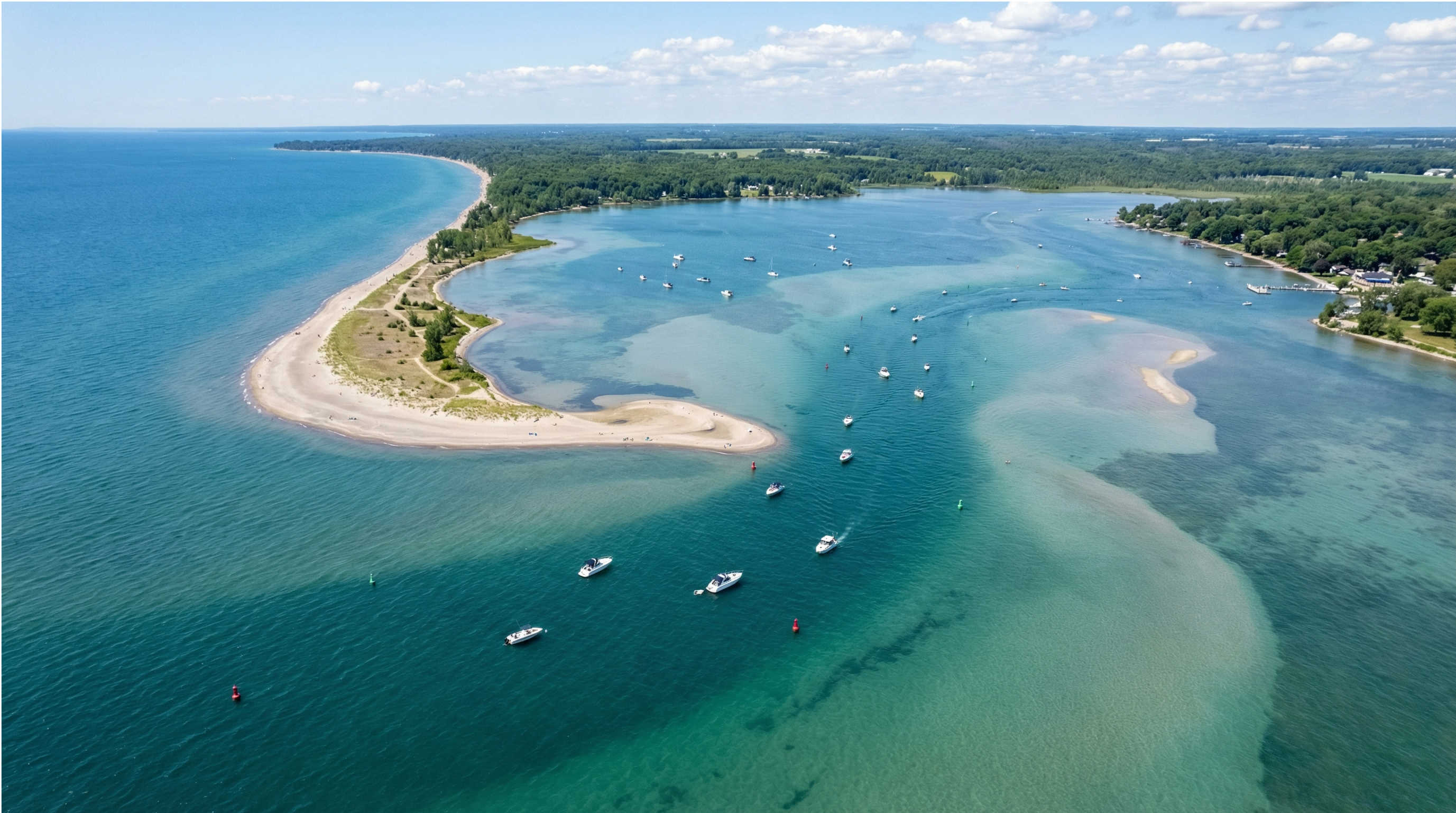
Long Point Bay is a boater’s paradise. It’s a place where the wild, unpredictable nature of Lake Erie is tamed by the protective embrace of the Long Point peninsula. For those of us who have spent years navigating these waters, the bay feels like a sanctuary, a place of calm where you can escape the lake’s more turbulent moods. But that sense of security can be a double-edged sword. The very same sand formations that create this boater’s haven also hide a series of navigational challenges that can turn a perfect day into a very bad one if you’re not prepared. I’ve seen it happen. A boat steaming along at 35 mph, seemingly in the middle of nowhere, comes to a sudden, grinding halt on a sandbar that wasn’t there last year. It’s a humbling experience, and one that this guide is designed to help you avoid.
This isn’t your standard, dry navigation guide. This is a boater-to-boater conversation about the realities of navigating Long Point Bay. It’s about understanding the bay’s personality, respecting its hidden dangers, and having the local knowledge to move through it with confidence. As we’ve discussed in our Lake Erie Boating Safety Guide, true safety isn’t just about having the right gear; it’s about having the right knowledge. This guide is a critical piece of that knowledge, a deep dive into the specific hazards and safe routes of Long Point Bay.
Quick Takeaways
Sandbars are the #1 Hazard. Long Point Bay is defined by its sandbars, which can shift year to year. Never trust your memory; always trust your instruments.
Bluff Bar is Deceptive. This massive sandbar in the Outer Bay can be ankle-deep in places and is miles from shore. It’s the most common and dangerous trap for boaters heading to the tip of Long Point.
Use the North Channel. When crossing the sandbar between the Inner and Outer Bays (near Pottahawk), the North Channel is the only reliably deep and well-marked passage. The South Channel is for experts only.
A GPS with a Depth Finder is Non-Negotiable. Navigating Long Point Bay without a reliable GPS and a depth finder with a shallow alarm is asking for trouble. This is your most important tool.
The Two Faces of Long Point Bay: Inner vs. Outer
To navigate the bay safely, you first have to understand that it’s really two distinct bodies of water, separated by a massive, submerged sandbar that runs from Turkey Point to Pottahawk Point.
The Inner Bay
This is the protected, shallower area closer to the mainland. It’s where you’ll find the marinas of Turkey Point and Port Dover, and it’s generally calmer and more forgiving. However, “shallow” is the operative word here. The Inner Bay is full of shifting sandbars and requires constant attention to your depth finder. This is not a place to set your course and forget it.
The Outer Bay
Once you pass through the channel at Pottahawk, you enter the Outer Bay. This is a much larger and deeper body of water, but it’s also more exposed to the conditions of the open lake. The Outer Bay is where you’ll find the most significant navigational hazards, including the infamous Bluff Bar. It’s also where you’ll encounter commercial fishing nets and gas well markers.
The Big Three: Navigational Hazards You Must Respect
There are many things to watch out for in Long Point Bay, but these three are the ones that cause the most trouble for boaters.
Bluff Bar: The Silent Menace
If you only remember one thing from this guide, make it this: respect Bluff Bar. This is a massive sandbar, several miles in length, that extends from the tip of Long Point back toward the northwest. It is, without a doubt, the most dangerous navigational hazard in the bay. What makes it so treacherous is its location. It’s not near the shore; it’s “out in the middle of the lake.” You can be in 25 feet of water one minute and hard aground in less than three feet the next. I’ve seen it happen countless times. A boater, thinking they are in deep, open water, tries to take a shortcut to the end of the Point and ends up stranded.
How to Handle It:
Identify it on your chart. Before you even leave the dock, find Bluff Bar on your GPS or nautical chart. It’s marked by several green buoys, but you need to know its general shape and location.
Go around, not across. There is no safe, reliable channel across Bluff Bar. The only safe way to navigate it is to go around its western end. Do not be tempted to take a shortcut.
Trust your instruments. Your eyes will deceive you. The water over Bluff Bar looks just like the deep water around it. Your GPS and depth finder are your only reliable guides.
The First Sandbar & Its Channels
The sandbar that separates the Inner and Outer Bays is another major hurdle. You cannot simply drive over it. You must use one of the two channels.
The North Channel: This is the one you want. It’s deep, wide, and clearly marked with red and green buoys. It’s the main highway for boat traffic in and out of the Inner Bay. As we mention in our First-Time Attendee Guide, this is the only channel you should be using if you are new to the area.
The South Channel: This channel is unmarked, narrow, and notoriously difficult to find. It’s a local’s shortcut, and even experienced boaters can get into trouble here, especially in low water or high waves. My advice? Pretend it doesn’t exist.
The Tip of the Point & Its Groins
The area around the very end of Long Point is a minefield of hazards. The sandbar extends underwater for a significant distance, and the north beach is lined with old concrete groins that extend out into the water. This is a place to be extremely cautious, especially if you are fishing or trying to get a close look at the lighthouse.
The Tools of the Trade: Your Navigational Toolkit
Navigating Long Point Bay safely is all about having the right tools and knowing how to use them. As we detail in our Ultimate Boat Packing Checklist, your navigational tools are just as important as your life jackets.
GPS/Chartplotter: This is your single most important tool. A modern GPS with an up-to-date chart of Long Point Bay is essential. It will show you the location of the sandbars, the channels, and other hazards.
Depth Finder with Shallow Alarm: Your depth finder is your real-time connection to what’s happening under your boat. Set the shallow alarm to a conservative depth (say, five feet) so that you have plenty of time to react if you start to run into shallow water.
Paper Chart as Backup: Electronics can fail. A paper chart of the bay, stored in a waterproof bag, is a crucial backup that every smart captain has on board.
Binoculars: A good pair of binoculars will help you spot channel markers, other boats, and potential hazards from a distance.
A Final Word from a Fellow Boater
Long Point Bay is one of the jewels of Lake Erie. It’s a place of incredible beauty and endless opportunities for adventure. But it’s also a place that demands respect. The key to enjoying it safely is to approach it with a healthy dose of humility. Acknowledge that the landscape beneath the water is constantly changing. Trust your instruments more than your eyes. And never be in such a hurry that you’re tempted to take a shortcut. Plan your route, use the channels, and give the sandbars a wide berth. If you do that, you’ll be able to enjoy everything this amazing place has to offer, year after year.
Sources & Further Reading
Tags
Share
Read Next
 Anchorages & Navigation
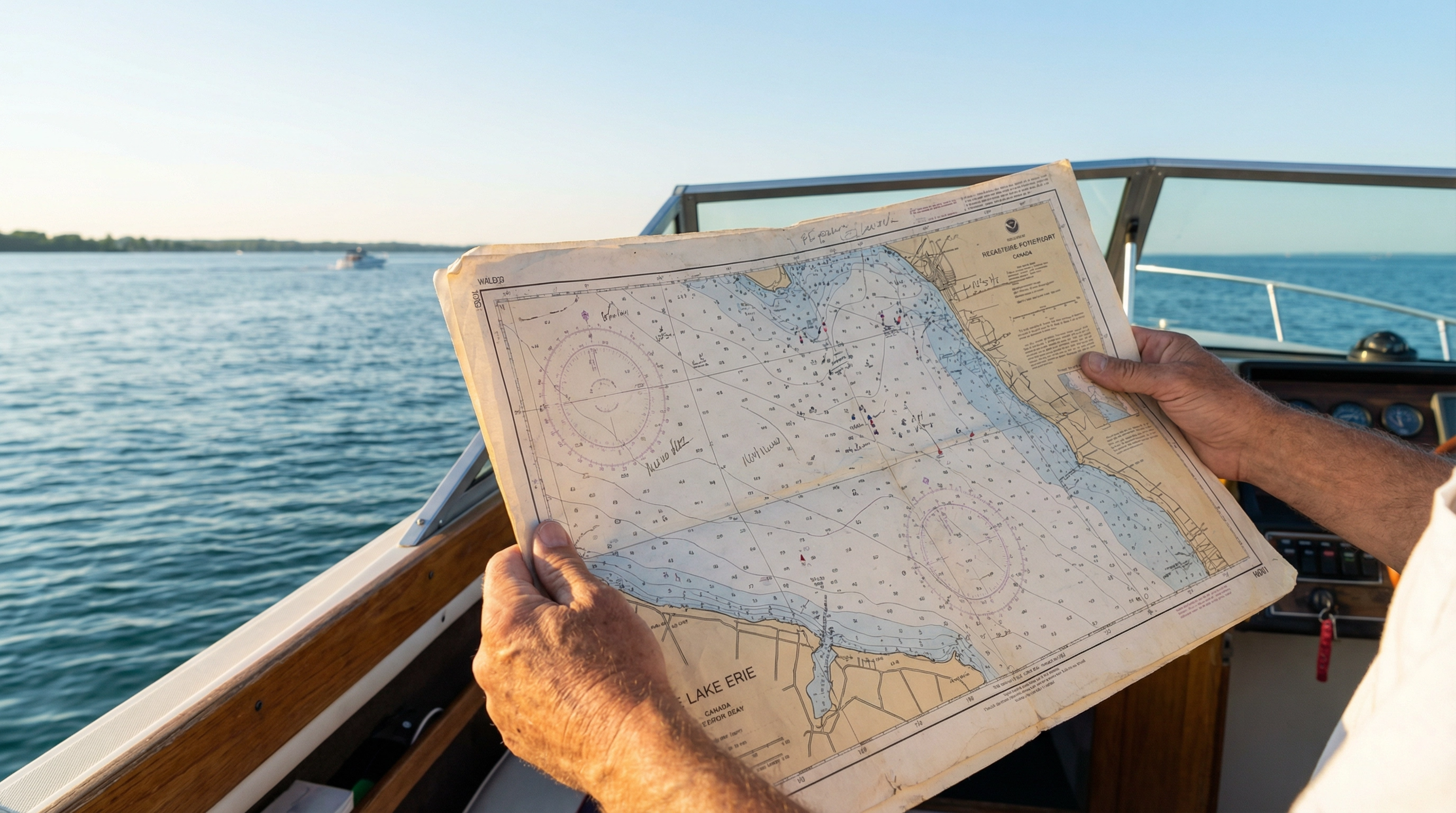
Navigating Like a Pro: Canadian Boating Rules, Buoys & Charts
There is a moment every new boater experiences on Lake Erie. You are cruising along, the sun is shining, and the water is relatively calm. Then, you spot a cluster of buoys ahead. One is red, one is green, and another has horizontal stripes.

Dwayne Rodrigues
Boat Owner & Enthusiast
 Anchorages & Navigation
How to Read Nautical Charts for Beginners
If you are new to boating on Lake Erie, looking at a nautical chart for the first time can feel like trying to read a foreign language. There are numbers scattered everywhere, strange symbols, and intersecting lines that do not seem to make much sense.
Dwayne Rodrigues
Boat Owner & Enthusiast
 Anchorages & Navigation
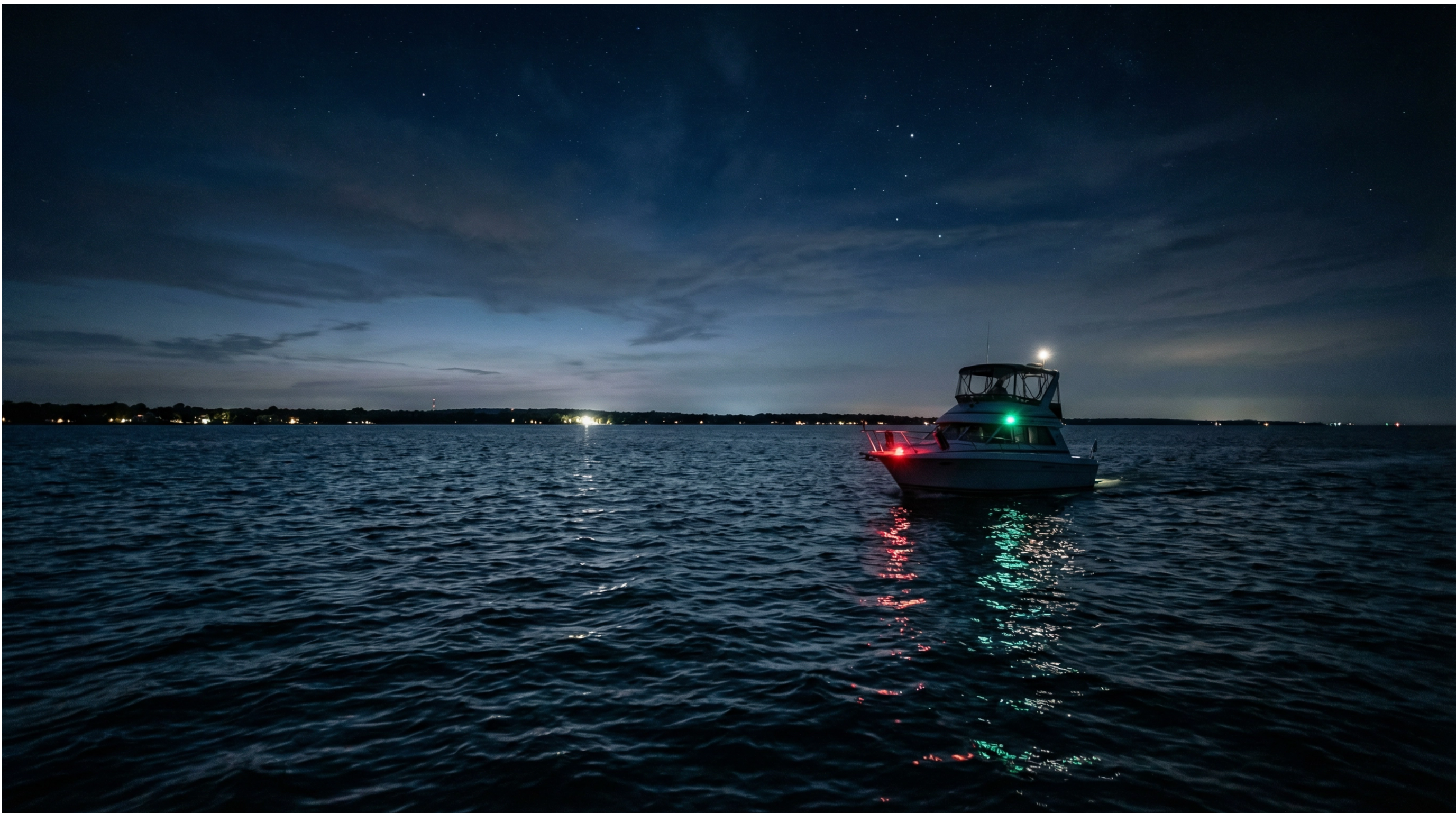
Night Boating on Lake Erie: Real Talk About the Risks
There’s a certain magic to being on the water after the sun goes down. The air cools, the stars pop, and the shoreline transforms into a string of distant, twinkling lights. It feels peaceful, private, almost like you have the whole lake to yourself.
Dwayne Rodrigues
Boat Owner & Enthusiast