Lake Erie Weather Pattern Survival Guide
I want to have a frank conversation with you. Not as some faceless blogger, but as someone who has seen the glassy, calm surface of Lake Erie turn into a churning, angry mess in the time it takes to make a sandwich. We all love this lake. We love the thril

Dwayne Rodrigues
Boat Owner & Enthusiast
Quick Takeaways
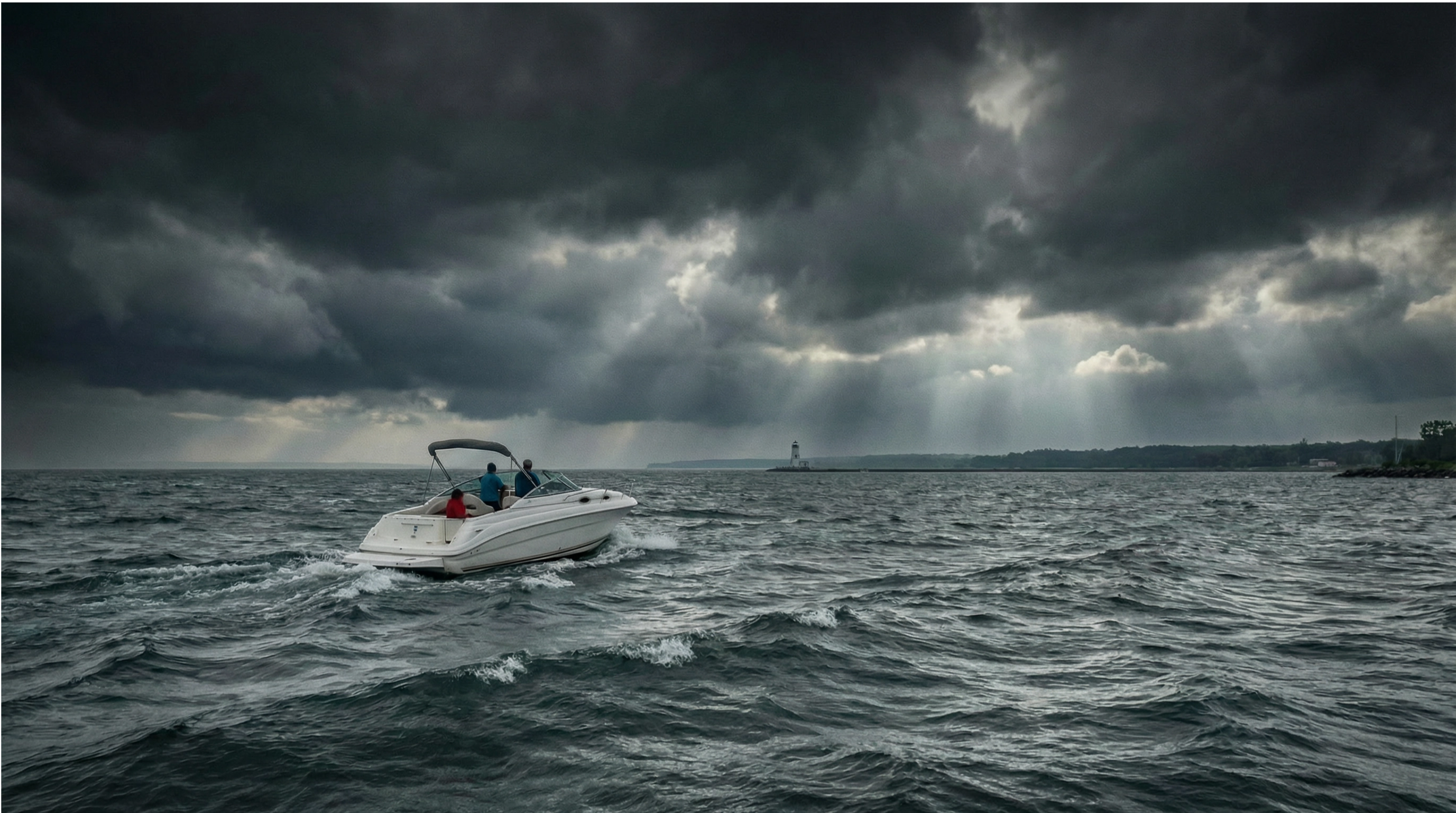
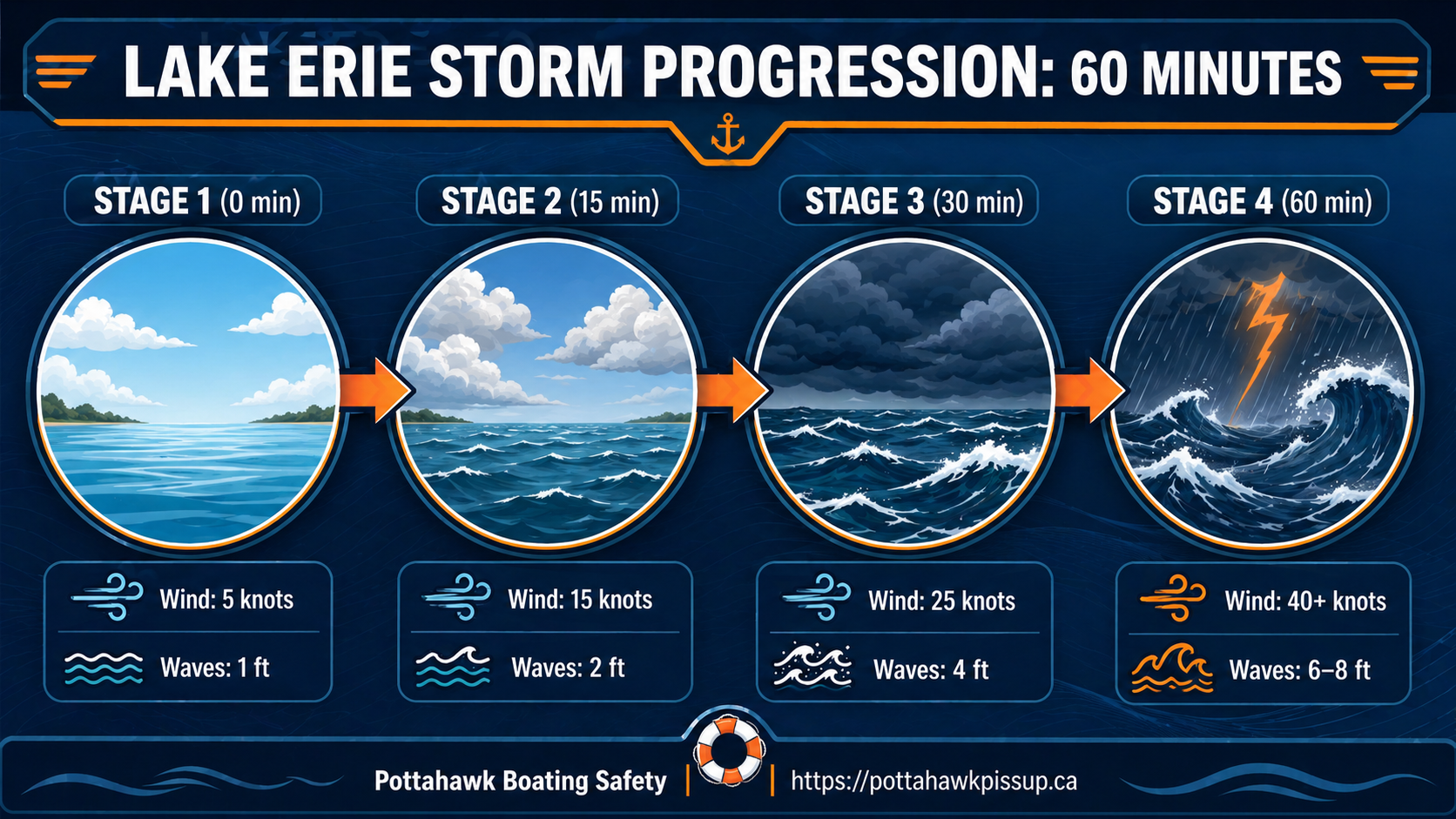
Lake Erie is the shallowest Great Lake, making it prone to rapid, violent weather changes. Waves can build to dangerous heights in under 30 minutes.
The "Lake Erie Bathtub Effect" (a seiche) can cause extreme, rapid water level changes, stranding boats or flooding shorelines.
Southwest winds are the classic recipe for danger on the eastern end of the lake, while northeast winds create hazardous conditions in the western basin.
Always check multiple marine forecasts before heading out, including both Environment Canada and NOAA for a complete picture.
A life jacket is your single most important piece of survival gear. In multiple documented Lake Erie survival stories, it was the only reason boaters were found alive.
I want to have a frank conversation with you. Not as some faceless blogger, but as someone who has seen the glassy, calm surface of Lake Erie turn into a churning, angry mess in the time it takes to make a sandwich. We all love this lake. We love the thrill of Pottahawk, the quiet anchorages of Long Point Bay, and the sun-drenched afternoons. But if we don't respect the raw power simmering just beneath that surface, it can, and will, turn on us.
Lake Erie isn't like the other Great Lakes. It's the shallowest, a characteristic that makes it uniquely treacherous. Think of it like a shallow pan of water versus a deep pot. A little shake (or in this case, wind) can create massive waves in the shallow pan almost instantly, while the deep pot barely ripples. That's Lake Erie in a nutshell. And honestly, if you haven't experienced it firsthand, it's hard to grasp just how quickly a perfect day can become a fight for your life.
Voices from the Water: Real Stories of Survival
Don't just take my word for it. The lake has a long memory, and it's filled with stories. Between 2014 and 2024, there were 48 boating-related deaths on Lake Erie. These aren't just statistics; they are families, friends, and communities torn apart.
Consider the 74-year-old boater who, in July 2025, floated for ten agonizing hours after his boat capsized. His only lifeline? The life jacket he was wearing. Or the 57-year-old woman who was thrown from her jet ski and survived 14 hours in rough, choppy seas. The Coast Guard credited her life jacket and a simple whistle for her survival. These aren't hypotheticals; they are stark reminders of the stakes.
These events happen with terrifying regularity. In August 2025, four people were rescued from a capsized 23-foot boat near Erie, Pennsylvania. These stories all share a common thread: the weather turned, and it turned fast.
The Anatomy of a Lake Erie Storm
So, what makes the weather here so uniquely volatile? It comes down to a few key ingredients that every Lake Erie boater should have burned into their brain.
1. The Southwest Wind: The Widowmaker
As we've mentioned in our guide to Lake Erie's weather patterns, a strong southwest wind is the classic recipe for a rough day, especially on the eastern end of the lake near Pottahawk. The wind has a long fetch—hundreds of kilometers of open water—to build up waves. They start as ripples near the western basin and by the time they reach Long Point, they can be monstrous, steep, and dangerously close together.
2. The Seiche: The Lake Erie Bathtub Effect
This is the one that truly sets Lake Erie apart. A seiche (pronounced "saysh") is a standing wave that oscillates in a body of water. On Lake Erie, it's caused by strong winds and rapid changes in atmospheric pressure pushing water from one end of the lake to the other. Think of it like sloshing water back and forth in a bathtub.
What does this mean for you? A seiche can cause the water level to drop by several feet at one end of the lake while rising by the same amount at the other, and it can happen in just a few hours. We saw this happen in November 2025 when the western basin nearly emptied, exposing the lakebed. For a boater, this could mean being stranded in a suddenly shallow marina or facing a violent surge of returning water.
3. Squall Lines and Thunderstorms
Lake Erie is a magnet for summer thunderstorms. These aren't just rain showers; they are organized lines of severe weather that can bring sudden high winds, lightning, and waterspouts. A squall line can roll in on a hot, humid day with little warning, turning a calm lake into a chaotic danger zone. Visibility can drop to near zero in torrential rain, and wind speeds can jump from 10 knots to 50 knots in minutes.
When Lake Erie is Most Dangerous: Seasonal Patterns
Here's the thing about Lake Erie: it has a personality that changes with the seasons. Understanding these seasonal patterns can mean the difference between a great day on the water and a nightmare.
Spring (April-May): The lake is waking up from winter. Water temperatures are still cold, often in the 4 Celsius. This creates a unique danger. If you fall in, hypothermia can set in within minutes. Spring also brings unstable weather patterns as warm air masses collide with the still-cold lake surface, creating sudden squalls and fog banks that can roll in with zero warning.
Summer (June-August): This is peak boating season, but it's also prime time for severe thunderstorms. The lake heats up, creating the perfect conditions for afternoon and evening storms. These storms can be violent, with lightning, high winds, and waterspouts. The good news? They are often visible on radar, giving you some warning time. The bad news? They can develop and move incredibly fast.
Fall (September-October): Many boaters consider fall the best time on Lake Erie. The water is warm, the crowds are gone, and the weather is generally stable. But don't let your guard down. Fall can bring the most intense storms of the year as cold fronts from Canada clash with the still-warm lake. These fronts can bring sustained high winds and massive waves. The New York Times recently reported that Lake Erie's storm surges are becoming more extreme, with longer storm seasons extending into late fall.
Winter (November-March): Most recreational boaters are off the water, and for good reason. Ice, freezing spray, and brutal cold make Lake Erie a death trap in winter. Even if you're not boating, be aware that ice conditions can be deceptive and deadly.
Your Survival Playbook: From Preparation to Crisis
Alright, enough with the scary stuff. Let's talk about what you can actually do about it. Surviving Lake Erie's wrath isn't about being the strongest; it's about being the smartest and most prepared.
Step 1: The Pre-Trip Obsession
Your survival starts before you even untie the lines. This goes beyond our standard Pre-Trip Inspection Checklist. This is a weather-specific obsession.
Check Multiple Sources: Don't just glance at your phone's weather app. You need to consult dedicated marine forecasts. Your go-to's should be the Environment Canada Marine Forecast for the Canadian side and the NOAA Marine Forecast for the U.S. side. Look for discrepancies. If one is calling for 10-knot winds and the other is hinting at 25, trust the higher number.
Understand the Synopsis: Read the text synopsis. It often contains crucial information about approaching fronts or pressure systems that the icons don't show.
Radar is Your Best Friend: Use a live radar app (like RadarScope or MyRadar) to see what's actually happening on the water, not just what's predicted. Look for those tell-tale red and yellow blobs heading your way.
Step 2: The Right Gear (That Actually Works)
Having the right safety gear is useless if it's buried in a locker or expired. Our Garmin GPSMAP & VHF review covers the high-tech side, but let's get back to basics.
Life Jackets (PFDs): Wear them. Don't just have them on board. In a sudden capsizing, you won't have time to grab one. Modern inflatable PFDs are comfortable and unobtrusive. There is no excuse.
VHF Radio: A cell phone is not a reliable rescue device on the water. A VHF radio is. Know how to use it, and teach your family how to use it. A DSC-equipped VHF connected to your GPS can send a distress signal with your exact location with the push of one button.
Signaling Devices: Your electronic flare is great, but also have a loud whistle and a mirror. They don't run out of batteries.
Step 3: When the Sky Turns Dark
You're out on the water, and you see that dark line of clouds on the horizon. The wind is picking up. Here's what you do, right now.
Get Everyone in a PFD: No discussion. Everyone puts on a life jacket immediately.
Turn Towards Safety: Your first instinct might be to outrun it. Don't. Your goal is to get to the nearest safe harbor, even if it's not your home port. Head into the waves at a 45-degree angle. This provides a less punishing ride than heading directly into them and reduces the risk of broaching (turning sideways to the waves).
Stow Everything: Secure all loose gear. Coolers, chairs, and water toys can become dangerous projectiles in heavy seas.
Communicate: Get on the VHF radio. You don't need to declare a mayday yet, but you can issue a "Securité" call to other boaters, letting them know about the changing conditions. You can also call the Coast Guard to log a float plan and let them know your position and intentions.
Step 4: In the Thick of It
The storm is on you. The waves are big, the rain is blinding, and it's loud. Your job is to stay calm and keep the boat pointed in the right direction.
Throttle Control: Don't try to power through the waves. You need to constantly work the throttle. Ease off as you go up the face of a wave, and apply a little power as you go down the back to maintain control.
Stay Low: Have everyone sit as low as possible in the boat, preferably in the center, to lower the center of gravity.
If You Lose Power: Deploy a sea anchor (or even a bucket tied to a line) from the bow. This will keep your bow pointed into the waves and prevent you from turning sideways and rolling.
If the Worst Happens: Capsizing and Man Overboard
Let's talk about the scenario nobody wants to think about: you're in the water. The boat has capsized, or someone has gone overboard. This is where your preparation and your gear become the difference between life and death.
If You Capsize:
Stay with the Boat: A capsized boat is still a much larger target for rescuers than a person in the water. It also provides something to hold onto, conserving your energy and keeping you warmer.
Activate Your EPIRB or VHF DSC: If you have an Emergency Position Indicating Radio Beacon (EPIRB) or a VHF radio with Digital Selective Calling (DSC), activate it immediately. This sends your exact GPS coordinates to the Coast Guard.
Signal for Help: Use your whistle, your electronic flare, or anything reflective to signal passing boats or aircraft.
Conserve Energy: Don't try to swim for shore unless it's very close and you're absolutely certain you can make it. Hypothermia and exhaustion are your enemies. Assume the HELP position (Heat Escape Lessening Posture): pull your knees to your chest and keep your arms close to your body.
If Someone Goes Overboard:
Throw, Don't Go: Your first instinct might be to jump in after them. Don't. Throw them a flotation device (life ring, cushion, anything that floats) immediately.
Keep Eyes On: Designate one person to keep constant visual contact with the person in the water. It's shockingly easy to lose sight of someone in even moderate waves.
Approach Carefully: When you maneuver to pick them up, approach from downwind so the boat drifts towards them, not away. Shut off the engine when they are alongside to avoid propeller injuries.
Weather Monitoring: Your Digital Lifeline
We've come a long way from just looking at the sky and licking a finger to test the wind. Modern technology gives us incredible tools to monitor Lake Erie's weather in real-time. Here are the essentials:
Apps and Websites:
Windy.com: This is my personal favorite. It provides incredibly detailed wind forecasts, wave models, and radar. You can see wind gusts, precipitation, and even lightning strikes in real-time.
PredictWind: Another excellent option, especially for sailors. It offers multiple weather models and allows you to compare forecasts.
NOAA Weather Radio: You can stream NOAA Weather Radio on your phone or have a dedicated marine radio. It provides continuous weather updates and immediate alerts for severe weather.
Buoy Data: The National Data Buoy Center has buoys scattered across Lake Erie that report real-time wind speed, wave height, and water temperature. This is actual data, not a forecast.
On-Board Systems:
Chartplotter with Weather Overlay: Modern chartplotters like the Garmin GPSMAP series can overlay real-time weather radar and forecasts directly on your navigation chart. This gives you a complete situational awareness picture.
AIS with Weather: Some AIS systems can receive weather data and display it on your screen.
The key is to use multiple sources and cross-reference them. If your phone app says calm and the buoy data shows 20-knot winds, trust the buoy.
Raft-Up Safety When the Weather Shifts
If you're heading to Pottahawk or any large raft-up event, weather becomes an even more critical concern. You're not just responsible for your own boat; you're part of a floating community. Our guide on how to safely attend large boat raft-ups covers the basics, but here's the weather-specific angle.
Before You Tie Up:
Check the Forecast for the Entire Event: Don't just look at the weather for the next few hours. Look at the extended forecast for the entire weekend. If there's a significant weather system predicted, you need to have an exit strategy.
Choose Your Position Wisely: If possible, tie up on the outside of the raft-up, not in the middle. This gives you the ability to quickly untie and leave if the weather deteriorates.
Communicate with Your Neighbors: Let the boats around you know your plans. If you're planning to leave early due to weather, give them a heads-up so they can adjust their lines.
When the Weather Changes:
Don't Be a Hero: If the forecast turns bad, don't feel obligated to stay. Your safety is more important than the party. Untie and head to a safe harbor.
Help Your Neighbors: If you see someone struggling with their lines or anchor in deteriorating conditions, offer to help. We're all in this together.
Monitor the Anchor: In a large raft-up, the anchor is holding a massive amount of weight. If the wind picks up, that anchor can drag, putting everyone at risk. Keep a close eye on your position and be ready to deploy your own anchor if needed.
This isn't about being paranoid. It's about being prepared. Lake Erie has a long history of catching boaters off guard. Don't let it catch you.
Sources & Further Reading
The Hamilton Spectator. He floated on the waters of Lake Erie for 10 hours, hoping to be found.
Fox 8 News. Coast Guard credits life jacket, whistle for woman's survival for 14 hours on Lake Erie.
Detroit Free Press. High winds causing water to 'vanish' from western Lake Erie.
The New York Times. Lake Erie's Storm Surges Become More Extreme.
Tags
Share
Read Next
 Guides
The Ultimate Guide to Raft-Up Safety: From Casual Cove to Pottahawk Chaos
There's a unique magic that happens when boats tie together on the water. It's the floating equivalent of a neighbourhood block party, a communal experience that turns individual vessels into a single, lively platform for swimming, grilling, and socializin

Dwayne Rodrigues
Boat Owner & Enthusiast
 Guides
Beginner's Guide to Boating in Canada
So, you’re thinking about getting into boating in Canada. Fantastic. You’re about to join millions of Canadians who take to our incredible lakes, rivers, and coastlines every year. It’s a world of breathtaking sunsets, unforgettable family moments, and the
Dwayne Rodrigues
Boat Owner & Enthusiast
 Guides
The Complete Guide to the Pottahawk Pissup
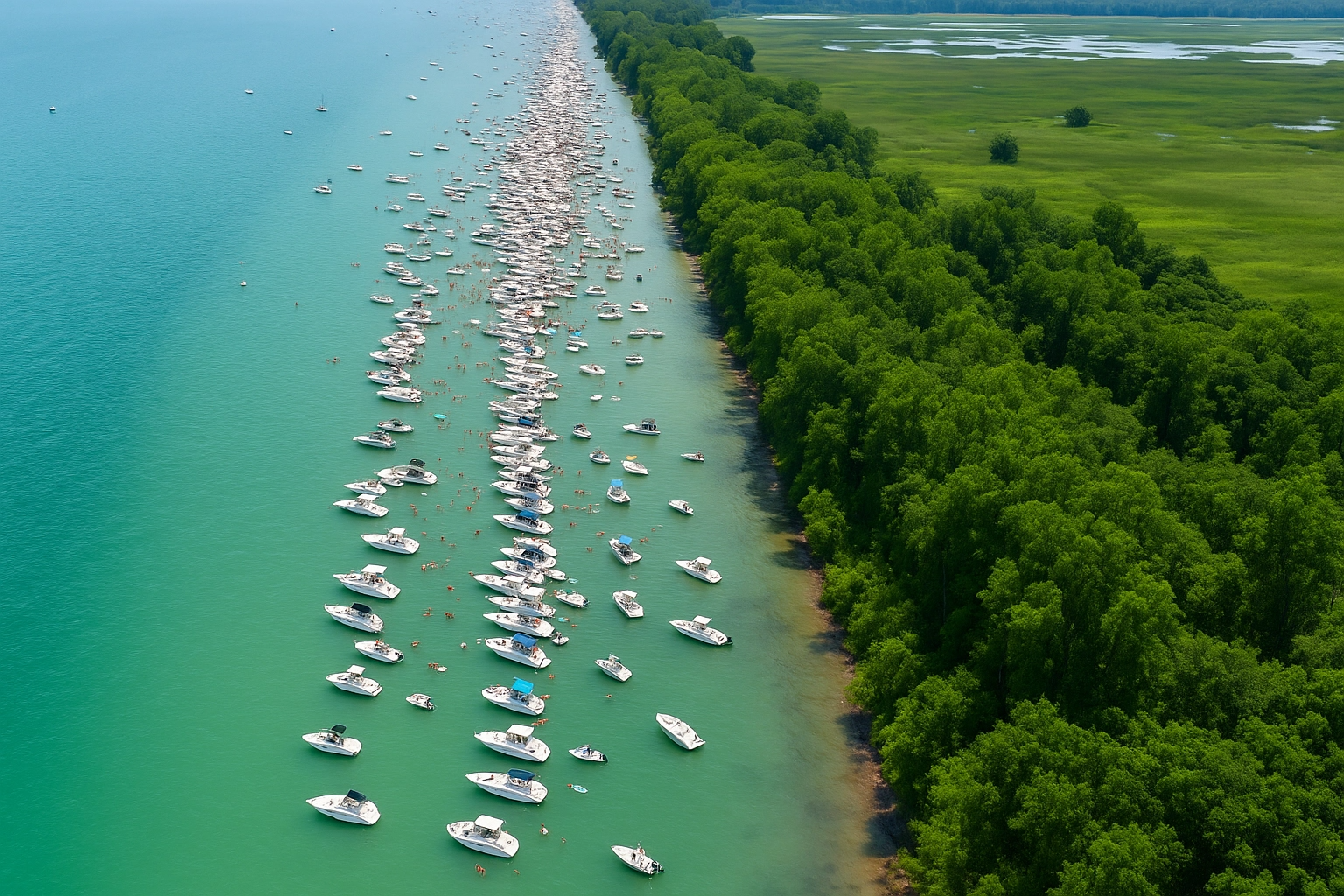
The Pottahawk Pissup is an unofficial, unsanctioned boat party held on the second Sunday of July at Pottahawk Point in Long Point Bay, Lake Erie. It is not an organized event. There are no official organizers, no tickets, and no formal schedule.
Dwayne Rodrigues
Boat Owner & Enthusiast