Stop Buying Explosives: The Smart Boater's Guide to Electronic Flares
Let's have a frank talk about something we all have tucked away in our boat's safety locker: pyrotechnic flares. We buy them, store them, and every few years, we replace them, often without a second thought. But what are they, really?

Dwayne Rodrigues
Boat Owner & Enthusiast
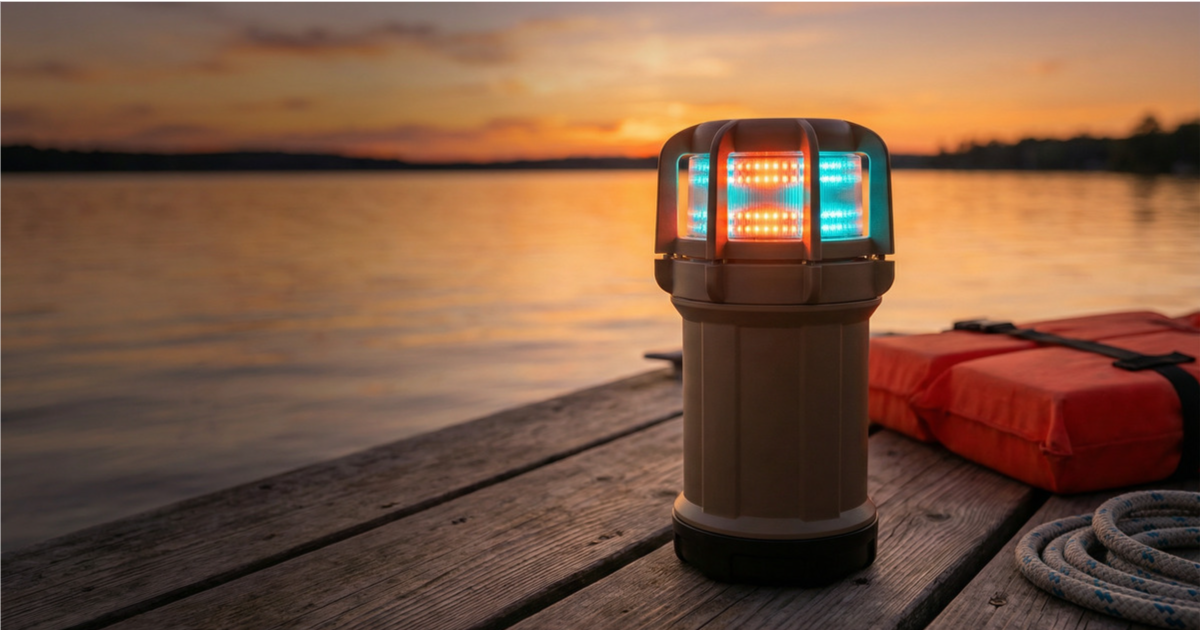
Let's have a frank talk about something we all have tucked away in our boat's safety locker: pyrotechnic flares. We buy them, store them, and every few years, we replace them, often without a second thought. But what are they, really? They're explosives. We are literally storing explosives on our boats, right next to our fuel tanks. And for what? A distress signal that lasts for less than a minute, is dangerous to handle, and has a notoriously short shelf life. It's time we stopped this madness. There's a better way.
Transport Canada has finally caught up with technology, and it's a game-changer for Canadian boaters. They have officially approved a new category of device, the Electronic Visual Distress Signal Device (eVDSD), to replace those archaic, hazardous flares. This isn't just a minor upgrade; it's a fundamental shift in how we think about safety on the water. We're talking about a device that never expires, is safe enough for a child to use, and performs better than its explosive counterpart in almost every way. Let's get into why you should stop buying explosives and make the switch to an electronic flare.
Quick Takeaways: Why Electronic Flares Win
They're Legal: Transport Canada now accepts eVDSDs that meet the RTCM 13200.0 standard as a full replacement for pyrotechnic flares on pleasure craft (when paired with a smoke signal).
They Don't Expire: Stop wasting money every 3-4 years. An electronic flare is a one-time purchase. The batteries last for years and are user-replaceable.
They're Safer: No fire, no burns, no risk of accidental ignition. You can safely test it, practice with it, and even let your kids handle it.
They Last Longer: An eVDSD flashes an SOS signal for hours, not seconds. A traditional flare burns out in under a minute.
High Affiliate Value: Products like the Sirius Signal C-1002 retail for $150-$300, making them a high-value item for affiliate marketers in the boating niche.
The Problem with Pyrotechnics: A Ticking Clock in Your Safety Locker
For decades, the bright red light of a pyrotechnic flare has been the universal symbol of distress on the water. But behind that symbol lies a host of problems we've all just come to accept. First, there's the 42-month expiration date. Every three and a half years, you're forced to buy a new set, whether you've used the old ones or not. And what do you do with the expired ones? You can't just toss them in the trash. They are hazardous waste, and proper disposal is a costly and inconvenient headache.
Then there's the safety issue. These things are literally handheld explosives. They burn at incredibly high temperatures and can easily cause severe burns or start a fire on your boat. Have you ever tried to light one in rough seas, with cold, wet hands, while also trying to manage your boat? It's a recipe for disaster. The short burn time—often less than 40 seconds for a parachute flare—means you have a very small window to be seen. If a potential rescuer blinks, they might miss you entirely.
The Technical Angle: Why Transport Canada Finally Made the Switch
This isn't just about convenience; it's about superior technology. Transport Canada didn't just wake up one day and decide to approve these devices. Their decision is based on a rigorous technical standard: RTCM 13200.0. This isn't just a random string of numbers; it's the benchmark for a modern, reliable distress signal.
According to the official Transport Canada policy on eVDSDs, any device meeting this standard is a legal replacement for all your pyrotechnic flares (rocket, multi-star, and hand-held) as long as you also carry an approved smoke signal for daytime use. This is a huge deal. It simplifies your safety kit and removes the most dangerous element from it.
So, what does RTCM 13200.0 actually guarantee? It specifies a device that:
Flashes a two-color (red-orange and cyan) SOS signal.
Includes a near-infrared signal visible to night-vision goggles.
Has a minimum intensity of 50 candela.
Runs for at least two hours continuously.
Operates in temperatures from -1°C to +30°C.
Can be stored in temperatures from -20°C to +55°C.
This is a signal that is brighter, lasts longer, and is more technologically advanced than any firework. The two-color requirement is particularly clever. The combination of red-orange and cyan creates a distinctive pattern that's easily distinguishable from navigation lights, fishing lights, or other sources of illumination on the water. The infrared component means that Coast Guard helicopters and search-and-rescue aircraft equipped with night-vision technology can spot you from much farther away.
Product Spotlight: The Sirius Signal C-1002
Now, let's talk about the specific product that's leading this revolution: the Sirius Signal C-1002. This was the world's first device to be engineered and certified to the new RTCM 13200.0 standard. It's not just a flashlight; it's a complete, well-thought-out safety system. You can find all the technical details on the Sirius Signal C-1002 product page.
From a technical standpoint, the C-1002 is impressive. It packs 13 high-intensity LEDs that flash the USCG-specified SOS signal in the required two-color pattern, plus infrared. It's visible for up to 10 nautical miles and runs for hours, not minutes. It's waterproof to the highest IP69 standard, it floats, and it's built to withstand the harsh marine environment. The device has been tested for dry heat, damp heat, low temperature, thermal shock, drop, vibration, solar radiation, rain and spray, corrosion, and electromagnetic compatibility. It's built to survive the worst conditions you can throw at it.
It even has a Bluetooth feature that lets you activate it remotely and check the battery status from your phone—a feature no other eVDSD on the market has. This is paired with the Afloat Plan Home App, which not only controls the light but also files float plans and can send instantaneous SOS notifications with your location to first responders, towing services, and designated contacts. It's like having a personal locator beacon integrated with your distress signal.
But here's the part that really matters for families: it's completely safe. There's no heat, no flame, and no explosive charge. You can hand it to your teenager and show them how to use it without worrying about them getting hurt. You can test it before you leave the dock to make sure it's working. This peace of mind is something pyrotechnic flares could never offer.
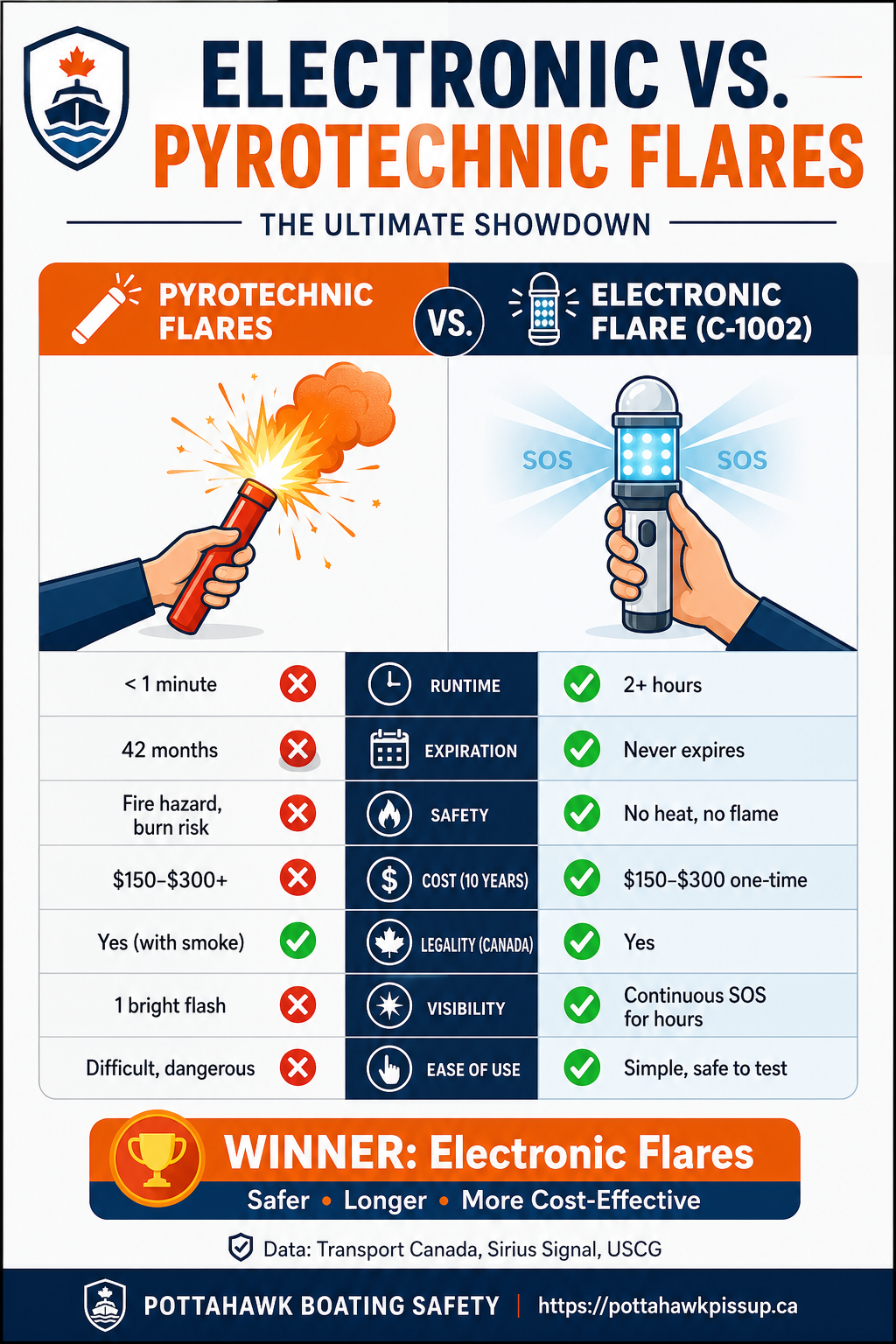
Electronic vs. Pyrotechnic: The Ultimate Showdown
Let's break down the real-world differences. This isn't just about specs on a page; it's about performance when it matters most.
Real-World Scenarios: When It Actually Matters
Theory is great, but let's talk about what happens when you actually need a distress signal. Picture this: you're out on Lake Erie, it's late evening, and your engine has died. You're drifting, the wind is picking up, and you can see a storm rolling in. You need help, and you need it now.
With a pyrotechnic flare, you have a few seconds to get someone's attention. You light it, it burns bright for maybe 30 to 40 seconds, and then it's gone. If the Coast Guard helicopter wasn't looking in your direction at that exact moment, you just wasted your one shot. Now you're down to your backup flares, and you're starting to panic.
With an electronic flare like the C-1002, you flip the switch and it starts flashing the SOS pattern. It keeps flashing. For hours. The helicopter that's 15 miles away will eventually sweep over your area, and when it does, your signal will still be going strong. The fishing boat that's heading back to port will see your light from miles away. You're not gambling on a 40-second window; you're broadcasting your distress continuously until help arrives.
This extended runtime also matters in another critical way: it gives rescuers a homing beacon. Once they spot your signal, they can navigate directly to you, even if conditions are poor. With a pyrotechnic flare, they see a flash, estimate your position, and then have to search the area. With an electronic flare, they follow the light straight to you.
Making the Switch: A Step-by-Step Guide
If you're convinced (and you should be), here's how to make the transition from pyrotechnics to electronic flares without any hassle.
Step 1: Check Your Current Flare Inventory: Look at the manufacture date on your existing pyrotechnic flares. If they're within 42 months of that date, they're still legal to use. You don't have to throw them out immediately, but start planning your transition.
Step 2: Understand the Requirements - In Canada, to fully replace your pyrotechnic flares with an eVDSD, you need two things: an approved eVDSD (like the Sirius Signal C-1002) and an approved smoke signal for daytime use. The smoke signal is still required because electronic lights are less visible during the day. Make sure you have both.
Step 3: Purchase Your eVDSD - The Sirius Signal C-1002 is available through marine supply retailers across Canada. Look for authorized dealers to ensure you're getting a genuine product with the full warranty. The device comes with everything you need: the light, batteries, a lanyard, a whistle, a daytime distress flag, and now a suction cup display mount.
Step 4: Familiarize Yourself with the Device - This is the part you couldn't do with pyrotechnics. Take the C-1002 out in your backyard or garage (somewhere the signal won't be visible to the public) and practice using it. Turn it on, see how the SOS pattern works, test the Bluetooth connection with the app. Make sure everyone on your boat knows where it's stored and how to activate it.
Step 5: Dispose of Old Flares Properly - Once you've made the switch, you need to get rid of your old pyrotechnic flares. Do not throw them in the trash. Contact your local fire department or hazardous waste facility for proper disposal options. Some marine retailers also offer flare disposal services. As noted by Orion Safety Products, expired flares are still considered hazardous materials and must be handled accordingly.
Step 6: Update Your Safety Checklist - Make a note in your boat's safety documentation that you've switched to an eVDSD. Update your float plan template to reflect the new equipment. If you're part of a boating club or regularly boat with friends, let them know about the change so they're aware of your new distress signal.
The Financial Case: Stop Burning Money
The initial price tag of an electronic flare, around $150 to $300, might seem steep compared to a $50 flare kit. But let's do the math. You have to replace that $50 kit every three years. Over a decade, you'll spend at least $150 on pyrotechnics, and that's before you factor in the cost and hassle of disposing of the old ones. The Sirius Signal C-1002 is a one-time purchase with a limited lifetime warranty. The only ongoing cost is a new set of CR123 batteries every few years, which run about $20 to $30.
Let's break it down over 15 years:
Pyrotechnic Flares:
Year 0: $75 (initial purchase)
Year 3: $75 (replacement)
Year 6: $75 (replacement)
Year 9: $75 (replacement)
Year 12: $75 (replacement)
Year 15: $75 (replacement)
Disposal costs: $50 (estimated over 15 years)
Total: $500
Electronic Flare (Sirius Signal C-1002):
Year 0: $250 (initial purchase)
Battery replacements: $60 (estimated over 15 years, 2-3 sets)
Total: $310
You save nearly $200 over 15 years, and that's a conservative estimate. If you factor in the time and hassle of dealing with expired flares, the savings are even greater. Plus, you have a device that's safer, more reliable, and more effective.
For those in the content creation and affiliate marketing space, this presents a golden opportunity. The high price point of the C-1002 translates to a substantial commission on every sale. By creating content that educates boaters on the safety, legal, and financial benefits, you're not just providing value—you're tapping into a lucrative new product category. As we discussed in our guide to safely attending large boat raft-ups, having the right safety equipment is essential for responsible boating.
Addressing Common Concerns
Whenever there's a new technology, there are always questions and concerns. Let's address the most common ones head-on.
"What if the batteries die?" The C-1002 uses 8 CR123 lithium batteries, which have a shelf life of 10 years when stored properly. The device also has a Bluetooth feature that lets you check the battery status from your phone, so you'll know well in advance if they need replacing. Compare that to pyrotechnic flares, which expire after 42 months whether you've used them or not.
"Can I really see it from 10 miles away?" Yes. The C-1002 has an effective intensity of at least 50 candela, which is the minimum required by the RTCM standard. In good conditions, it's visible from up to 10 nautical miles. That's farther than most pyrotechnic flares, which are typically visible for 3 to 5 miles.
"What if I drop it overboard?" It floats. The C-1002 has an integrated protective collar that provides superior flotation. It's also waterproof to the IP69 standard, which is the highest level of protection available. You can submerge it, drop it, kick it around, and it will keep working.
"Is it really legal in Canada?" Absolutely. As long as the device meets the RTCM 13200.0 standard and you also carry an approved smoke signal, it's a full legal replacement for all pyrotechnic flares on pleasure craft. This is official Transport Canada policy. You can read the full details on the Transport Canada requirements page.
"What about daytime use?" Electronic flares are less visible during the day, which is why Transport Canada requires you to also carry an approved smoke signal. The C-1002 kit includes a daytime distress flag, and you'll need to purchase a smoke signal separately. This is still simpler and safer than carrying multiple types of pyrotechnic flares.
The Bigger Picture: A Shift in Boating Safety Culture
The approval of electronic flares by Transport Canada is part of a larger trend in boating safety. We're moving away from single-use, hazardous devices toward reusable, technology-driven solutions. This is the same shift we've seen with navigation (GPS replacing paper charts), communication (VHF radios and satellite messengers), and even life-saving equipment (inflatable PFDs with integrated beacons).
The boating community has always been slow to adopt new technology, often for good reason. We value reliability and proven performance over flashy gadgets. But electronic flares aren't a gimmick. They've been rigorously tested, certified by multiple regulatory bodies (USCG, Transport Canada, MAST), and are already in use by thousands of boaters across North America. The technology works, and it works better than what we've been using for the past century.
As we covered in our post on the new 2026 boat licence changes, staying current with regulations and safety standards is a key part of being a responsible boater. Upgrading your distress signals is the next logical step in that evolution.
The Final Word: It's Time to Evolve
Change in the boating world can be slow, but this one is a no-brainer. We have a technology that is safer, more effective, more reliable, and cheaper in the long run than the explosive sticks we've been using for generations. The Sirius Signal C-1002 represents the future of marine distress signaling, and that future is available right now.
Keeping pyrotechnic flares on your boat is like choosing a paper map over a GPS. It works, but the technology has moved on to something far superior. Stop buying explosives. Make the one-time investment in an electronic flare like the Sirius Signal C-1002. It's a smarter, safer, and more responsible choice for every Canadian boater.
Your family will thank you. Your wallet will thank you. And when you're out on the water, you'll have the peace of mind that comes from knowing you have the best possible safety equipment on board.
Sources & Further Reading
Tags
Share
Read Next
 Equipment & Gear
Best Boat Anchors for the Great Lakes: A Complete Guide by Bottom Type
If you spend enough time boating on the Great Lakes, you will eventually find yourself dragging anchor. It usually happens at the worst possible time, when the wind kicks up, the chop builds, and you are surrounded by other boats.

Dwayne Rodrigues
Boat Owner & Enthusiast
 Equipment & Gear
Best Waterproof Bags for Boating: 6 Top Picks for Canadian Waters
There is a moment every boater dreads. You hit an unexpected wake, a sudden squall rolls across the lake, or someone simply slips while stepping onto the dock. In an instant, your phone, your dry clothes, and your boat registration are soaked.
Dwayne Rodrigues
Boat Owner & Enthusiast
 Equipment & Gear
Best VHF Radios for Lake Erie Boaters
A VHF marine radio is not a luxury item. On Lake Erie, where squalls can build in under an hour and commercial traffic shares the same water as recreational boats, it is one of the most important pieces of safety equipment you can carry.
Dwayne Rodrigues
Boat Owner & Enthusiast