Do You Need a Boating Licence in Canada?
If you are planning to spend any time on the water this summer, you have probably asked yourself the big question: do you need a boating licence in Canada? The short answer is yes. If your boat has a motor, you need a licence.

Dwayne Rodrigues
Boat Owner & Enthusiast
Quick Takeaways
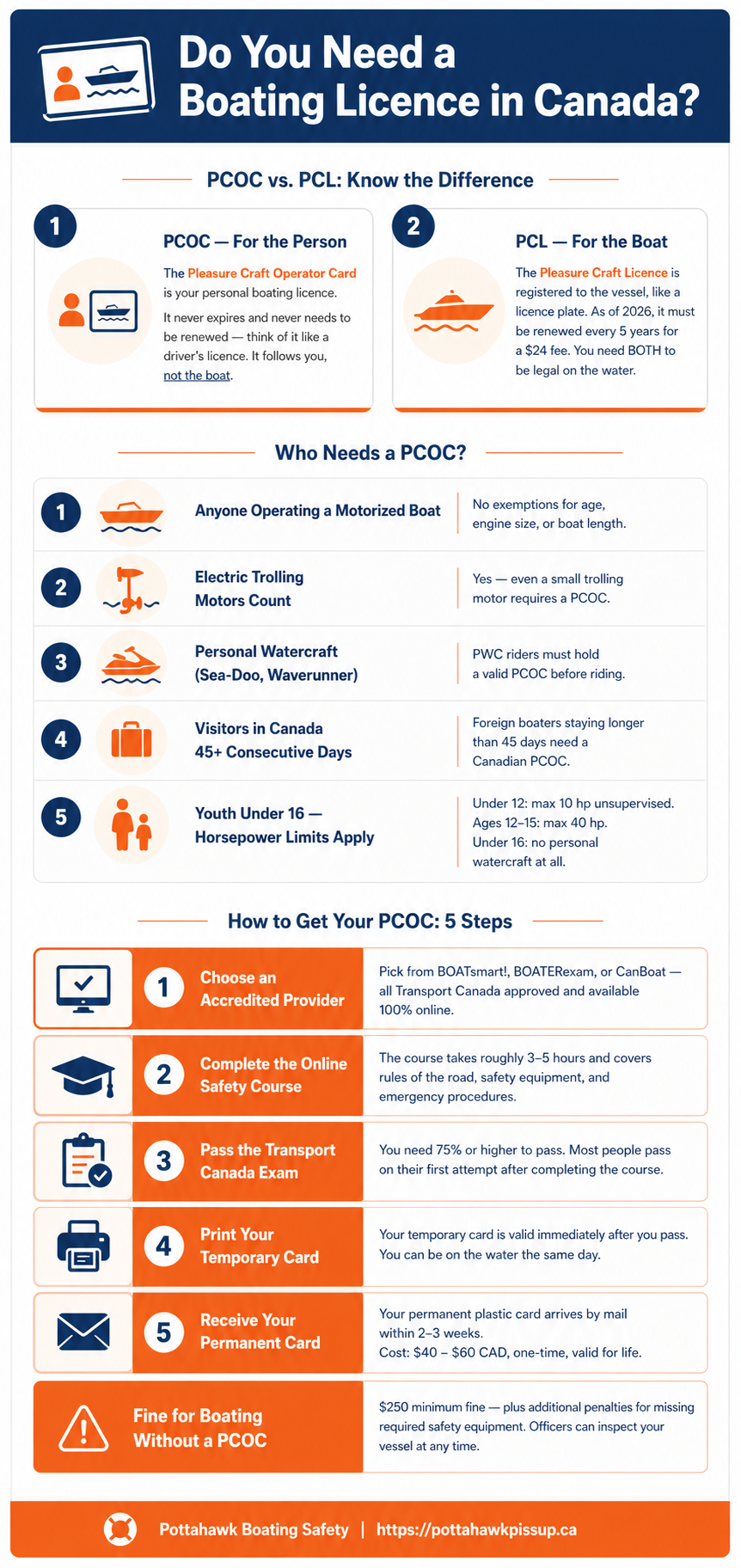
Yes, you need a licence. Anyone operating a motorized boat in Canada needs proof of competency, most commonly the Pleasure Craft Operator Card (PCOC).
There are no exemptions. Age, boat size, and horsepower do not matter. If it has a motor (even an electric trolling motor), you need a PCOC.
It lasts for life. Unlike the new 2026 rules for boat registration (Pleasure Craft Licence), your PCOC never expires and does not need to be renewed.
The fine is $250. Getting caught without your PCOC on board will cost you a $250 fine under the Small Vessel Regulations.
PCOC vs. PCL: The PCOC is for the operator (like a driver's licence). The Pleasure Craft Licence (PCL) is for the boat (like a licence plate).
If you are planning to spend any time on the water this summer, you have probably asked yourself the big question: do you need a boating licence in Canada?
The short answer is yes. If your boat has a motor, you need a licence.
But honestly, the long answer is where people get confused. Between the Pleasure Craft Operator Card (PCOC), the Pleasure Craft Licence (PCL), the new 2026 Transport Canada rules, and the endless acronyms, it is easy to see why so many boaters end up scratching their heads. You know what? It does not have to be that complicated.
Let me explain exactly what you need to legally drive a boat in Canada, how much it costs, how to get it, and what happens if you decide to risk it without one.
What Exactly is a Canadian Boating Licence?
When people talk about a "Canadian boating licence," they are almost always talking about the Pleasure Craft Operator Card (PCOC).
The PCOC is a federal competency card issued by Transport Canada. It proves that you have taken an accredited boating safety course and passed the final exam. Think of it as your driver's licence for the water. It shows that you understand the basic rules of navigation, how to read buoys, what safety equipment you need, and what to do in an emergency.
Since 2009, the law has been crystal clear. All operators of recreational motorized boats in Canada are required to obtain proof of competency.
Are There Any Exemptions?
This is where a lot of old-school boaters get tripped up. Back in the day, there were loopholes based on the size of your boat or the size of your engine. Those days are gone.
Today, there are no exemptions for age, horsepower, or boat length.
If you are operating a 40-foot cruiser with twin V8s, you need a PCOC. If you are operating a 10-foot aluminum tinny with a tiny electric trolling motor, you still need a PCOC. Even if you are just taking a Sea-Doo out for a quick spin, you need the card. If it has a motor, the rule applies.
The only real exceptions are for non-residents operating a foreign-registered boat in Canada for less than 45 consecutive days, or if you are operating a boat in the waters of Nunavut or the Northwest Territories. But if you are reading this while planning a trip to Lake Erie or Georgian Bay, you need the card.
The Big Confusion: PCOC vs. Pleasure Craft Licence (PCL)
Here is the thing that confuses almost every new boater. There are two different documents you need to know about, and they sound incredibly similar.
You have the Pleasure Craft Operator Card (PCOC) and the Pleasure Craft Licence (PCL).
What is the difference? It is actually pretty simple once you break it down.
The PCOC is for the person. It is your proof of competency. It is your driver's licence.
The PCL is for the boat. It is the unique identification number assigned to your vessel. It is your licence plate.
You need the PCOC to legally operate the boat. You need the PCL to legally identify the boat.
The New 2026 PCL Rules You Need to Know
While your PCOC (your operator card) is valid for life and never expires, the rules for the Pleasure Craft Licence (your boat's registration) have just changed in a major way.
As of late 2025 and moving into 2026, Transport Canada has completely overhauled the PCL system. Pleasure Craft Licences are no longer issued for life. Under the new rules, all boat licences must be renewed every five years, and there is now a $24 service fee to issue, renew, transfer, or replace a licence.
If you bought a boat years ago and thought your lifetime PCL was good forever, you need to check your expiration date. Transport Canada is phasing out the old lifetime licences and assigning them expiration dates based on when they were originally issued.
So, to recap: your operator card (PCOC) is good for life. Your boat's registration (PCL) now needs to be renewed every five years. Do not mix them up, or you could end up with a hefty fine.
How to Get Your Boating Licence (PCOC)
Getting your PCOC is actually a very straightforward process. You do not have to go to a ServiceOntario or wait in line at a government office. The entire process can be done online from your couch.
Here is how it works:
Choose an Accredited Provider: You need to take the course through a Transport Canada-accredited provider. The most popular options are BOATsmart!, BOATERexam, and CanBoat.
Take the Course: The online course takes about three to five hours to complete. It covers everything from basic boat safety equipment to navigation rules and emergency procedures. You can start and stop the course whenever you want, so you do not have to do it all in one sitting.
Pass the Exam: Once you finish the course modules, you have to take the final Transport Canada Boating Safety Test. It is an open-book, multiple-choice exam. You need a score of 75% to pass.
Print Your Temporary Card: As soon as you pass the exam, you can print a temporary PCOC right from your computer. This temporary card is valid immediately, meaning you can legally hit the water that same day.
Wait for the Mail: Your permanent, plastic Pleasure Craft Operator Card will arrive in the mail a few weeks later.
How Much Does It Cost?
The cost of getting your PCOC varies slightly depending on which provider you choose, but you can generally expect to pay between $40 and $60 CAD.
For example, BOATsmart! charges around $49.95 plus tax. This fee covers the online course, the final exam, and the physical card that gets mailed to you. Considering the card is valid for life and never needs to be renewed, it is a pretty small price to pay for a lifetime of legal boating.
Age Restrictions and Horsepower Limits
While there is no minimum age to actually take the PCOC course and get the card, there are strict rules about what kind of boat a young person can operate, even if they have their licence.
Transport Canada has specific horsepower restrictions for youth to keep everyone safe on the water.
Under 12 years old: If they are not directly supervised by someone 16 or older, they can only operate a boat with a motor up to 10 horsepower (7.5 kW).
12 to 15 years old: If they are not directly supervised by someone 16 or older, they can only operate a boat with a motor up to 40 horsepower (30 kW).
Under 16 years old: They are strictly prohibited from operating a Personal Watercraft (like a Sea-Doo or Waverunner) under any circumstances, regardless of supervision.
So, yes, your 14-year-old can get their PCOC and take the family tinny out fishing. But they cannot take the 250-horsepower wake boat out for a spin unless you are sitting right there next to them.
What Happens If You Get Caught Without a Boating Licence?
This is the part where a lot of people try to play the odds. They think, "I have been boating for twenty years, I know what I am doing, and I never see the marine police anyway."
That is a dangerous game to play, especially on busy waterways like Lake Erie or during massive events like the Pottahawk Pissup.
If you are pulled over by the OPP Marine Unit, the RCMP, or any other enforcement officer, the very first thing they will ask for is your Pleasure Craft Operator Card. If you cannot produce it, you are getting a ticket.
The fine for operating a motorized vessel without proof of competency is $250.
That is a steep price to pay for a card that costs fifty bucks and takes a few hours to get online. And remember, that $250 fine is just for not having the card. If the officer decides to do a full safety check and finds that you are missing flares, a heaving line, or properly fitting lifejackets, the fines will stack up incredibly fast.
It is also worth noting that the $250 fine applies to the operator, not necessarily the owner of the boat. If you let your buddy drive your boat and he does not have a PCOC, he is getting the ticket. But if you knowingly allow someone without a PCOC to operate your vessel, you could also face fines.
Do You Need Boat Insurance in Canada?
This is another massive area of confusion for Canadian boaters. You have your PCOC to drive the boat, and your PCL to register the boat. But what about insurance?
Unlike car insurance, boat insurance is not legally required in Ontario or anywhere else in Canada. There is no federal or provincial law that forces private boat owners to carry insurance to operate a recreational vessel.
But just because it is not legally required does not mean you should skip it.
Think about it. You are operating a heavy, expensive machine on unpredictable water, surrounded by other boaters who may or may not know what they are doing. If you hit a submerged rock, run aground in shallow water, or collide with another vessel, the repair bills can be astronomical.
More importantly, if someone gets hurt on your boat, or if you injure someone else, you are personally liable for the damages. A standard boat insurance policy covers liability, property damage, theft, and even environmental cleanup if your boat sinks and leaks fuel.
When Insurance Becomes Mandatory
Even though the government does not require boat insurance, you will probably find that you need it anyway.
If you plan to keep your boat at a marina, they will almost certainly require proof of insurance before they let you sign a slip agreement. If you financed your boat, your lender will require you to carry comprehensive insurance until the loan is paid off.
So, while you will not get a $250 ticket from the marine police for boating without insurance, you are taking a massive financial risk every time you leave the dock without it.
The Bottom Line on Canadian Boating Licences
Boating in Canada is an incredible privilege, but it comes with serious responsibilities. The rules are not there to ruin your weekend; they are there to make sure everyone gets home safely.
If you are planning to operate a motorized boat this season, do yourself a favour and get your Pleasure Craft Operator Card. It is cheap, it is easy to get online, and it lasts for the rest of your life.
Do not wait until the Friday before a long weekend to realize you need it. Take the course, pass the exam, print your temporary card, and hit the water with confidence.
The Reality of Boating Without a Licence
Let's talk about the real-world implications of ignoring the rules. It is easy to sit behind a keyboard and read about fines, but what actually happens when you are out on the water and the marine police pull you over?
First of all, they are not just looking for your PCOC. When the OPP Marine Unit or the RCMP stops a vessel, they are conducting a full safety check. They want to see your Pleasure Craft Licence (PCL) numbers displayed correctly on the bow. They want to see your lifejackets, your bailer, your sound-signaling device, and your watertight flashlight.
If you cannot produce your PCOC, the interaction immediately changes tone. You have just proven that you either do not know the rules or do not care enough to follow them. This gives the officer every reason to scrutinize your vessel from bow to stern.
A $250 fine for missing your PCOC is bad enough. But if they also find that your fire extinguisher is expired, your flares are out of date, and you do not have enough lifejackets for everyone on board, you could be looking at well over $1,000 in fines before you even make it back to the dock.
And here is the kicker: if you are caught operating a boat without a PCOC, the officer can legally order you to return to shore immediately. Your day on the water is over. You cannot just take the ticket and keep cruising. You have to pack it up and head home.
The Insurance Nightmare
We already established that boat insurance is not legally required in Ontario. But let's say you do have insurance, and you get into an accident while operating your boat without a valid PCOC.
Guess what happens next? Your insurance company is almost certainly going to deny your claim.
Insurance policies are written with the explicit understanding that you are operating your vessel legally. If you are driving without the mandatory federal competency card, you are breaking the law. If you hit a submerged log and tear the lower unit off your sterndrive, you are going to be paying for that $5,000 repair out of your own pocket.
If you cause an accident that injures another boater, the financial consequences could ruin you. You will be personally liable for their medical bills, lost wages, and pain and suffering. Without insurance coverage to protect you, you could lose your house, your savings, and your boat.
All because you did not want to spend fifty bucks and a few hours taking an online course. It is just not worth the risk.
Frequently Asked Questions About Canadian Boating Licences
Even with all the information available online, boaters still have a lot of questions about the PCOC and the PCL. Here are some of the most common questions we hear on the docks and at the launch ramps.
Do I need a PCOC to rent a boat?
No, you do not need a PCOC to rent a boat in Canada, but there is a catch. If you do not have a PCOC, the rental agency is required by law to complete a Rental Boat Safety Checklist with you before you leave the dock.
This checklist covers the basic safety features of the specific boat you are renting, the local navigation rules, and what to do in an emergency. Once you and the rental agent sign the checklist, it serves as your temporary proof of competency for the duration of the rental period.
However, this checklist is only valid for that specific rental. If you rent a boat again the next day, you have to do the checklist all over again. If you plan on renting boats frequently, it is much easier to just get your PCOC and be done with it.
Can I use my American boating licence in Canada?
Yes, if you are a visitor to Canada and you are operating a foreign-registered boat, you can use your state-issued boating safety certificate or NASBLA-approved card as proof of competency.
However, this exemption only applies if you are operating the boat in Canada for less than 45 consecutive days. If you keep your boat at a Canadian marina for the entire summer, you will eventually need to get a Canadian PCOC.
If you are an American citizen but you are operating a Canadian-registered boat (like a rental or a friend's boat), you must carry proof of competency at all times. Your state-issued card will work, but you must have it on board.
What if I lose my PCOC?
If you lose your Pleasure Craft Operator Card, you do not have to take the course and the exam all over again. Because the card is valid for life, your certification is kept on file by the course provider who issued it.
You simply need to contact the provider (like BOATsmart! or BOATERexam), pay a small replacement fee (usually around $20 to $30), and they will mail you a new card.
If you cannot remember which company issued your card, Transport Canada has a Course Provider Lookup tool on their website that can help you track it down.
Does a PCOC allow me to drive a commercial vessel?
Absolutely not. The Pleasure Craft Operator Card is strictly for recreational boating. It does not allow you to operate a commercial vessel, a passenger-carrying vessel, or a workboat.
If you want to operate a boat for commercial purposes, you need to obtain a Small Vessel Operator Proficiency (SVOP) certificate or a higher-level marine certification from Transport Canada.
This is a critical distinction, especially for people who think they can use their personal boat to run an illegal charter to Pottahawk. If you are charging people money for a ride, you are operating a commercial vessel, and your PCOC is completely useless. The fines for operating an illegal charter are massive, and your insurance will not cover you if something goes wrong.
The Final Word on Boating Licences
At the end of the day, the rules surrounding Canadian boating licences are designed to keep everyone safe. The waterways are getting more crowded every year, and the boats are getting faster and more powerful.
Taking a few hours to learn the rules of the road, understand the buoy system, and familiarize yourself with emergency procedures is the absolute bare minimum we should expect from anyone operating a motorized vessel.
Get your PCOC. Register your boat and keep your PCL up to date. Make sure you have the required safety equipment on board. And please, for the love of God, consider getting boat insurance.
The water is an incredible place to spend your summer, but it demands respect. Do it right, do it legally, and you will have a lifetime of amazing memories on the lake.
Sources & Further Reading
Tags
Share
Read Next
 Safety
Marine Emergencies: A Complete Guide to On-Water Incidents
There is a moment every boater dreads. You are cruising along, enjoying the sun and the water, when suddenly the engine cuts out, smoke starts billowing from the hatch, or someone slips and falls over the rail. In that split second, the peaceful day on the

Dwayne Rodrigues
Boat Owner & Enthusiast
 Safety
How to Avoid Running Aground: A Boater's Guide to Shallow Water Safety
Running aground is one of those boating experiences that ranges from a minor, face-reddening embarrassment to a catastrophic emergency. One minute you are cruising along enjoying the sun, and the next, there is a sickening crunch, a sudden stop, and every
Dwayne Rodrigues
Boat Owner & Enthusiast
 Safety
"The Unseen Killer: Why Cold Water Boating on the Great Lakes Demands Your Full Respect"
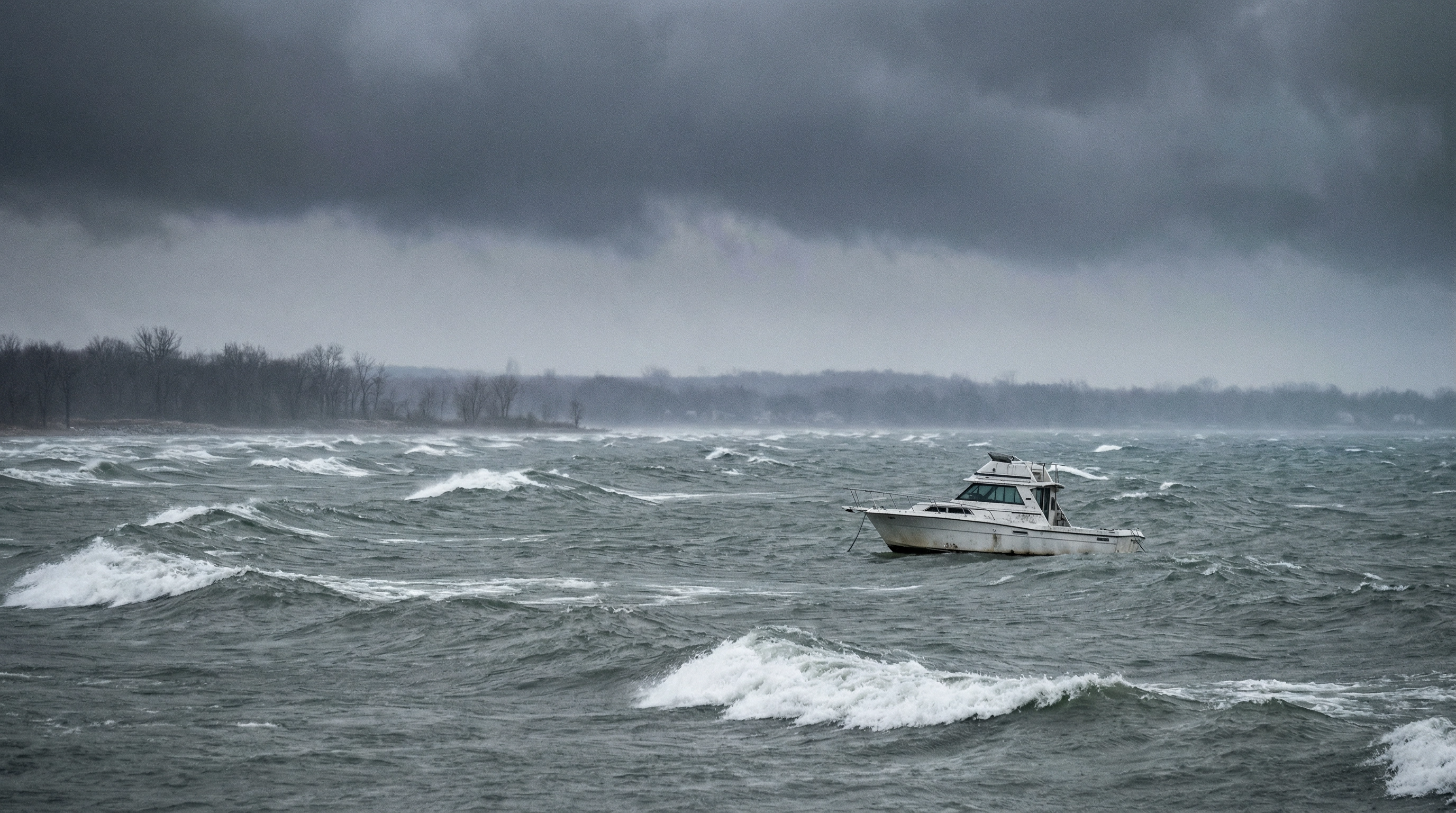
It is a perfect spring day on Lake Erie. The sun is out, the air feels warm for the first time in months, and the water looks deceptively calm. It feels like summer, but it is not. Beneath that placid surface, the water is a chilling 7 degrees Celsius
Dwayne Rodrigues
Boat Owner & Enthusiast